
HPV and Relationships—Answers to Your Questions
After a diagnosis, it’s normal to have questions about HPV and relationships: What does this mean for our health? Did someone cheat? Should we stop having sex?


Most sexually active individuals are estimated to have one or more infections in their lifetime with the human papillomavirus (HPV) and, not surprisingly, ASHA receives countless HPV questions like:
What should I tell a partner?
Will I always have it?
How are HPV tests used?
How well do vaccines work?
In this episode, H. Hunter Handsfield, MD, covers these and other common questions about HPV. Dr. Handsfield is Professor Emeritus of Medicine, University of Washington Center for AIDS and STD, and former director of the Sexually Transmitted Diseases Control Program for Public Health—Seattle & King County, Seattle, Washington.
Subscribe to Sex+Health at Apple Podcasts, Spotify, or wherever you listen to podcasts.

After a diagnosis, it’s normal to have questions about HPV and relationships: What does this mean for our health? Did someone cheat? Should we stop having sex?

Three organizations—ACS, ACOG, and HRSA—have each recently endorsed new guidelines for cervical cancer screening. All of them discuss screening with self collected samples.
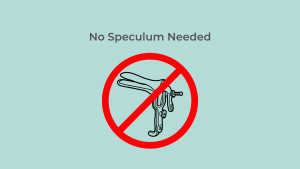
There’s a new way to screen for cervical cancer—no pelvic exam, stirrups, or speculum involved.
A study has found a dramatic drop in the rates of cervical pre-cancers in young adult women—evidence that the HPV vaccine is working.
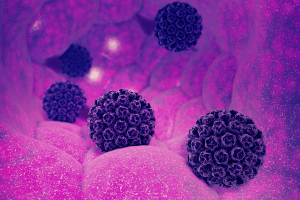
Human papillomavirus, or HPV, is very common. Some types of HPV can cause genital warts and other types can cause cancer, including cancer of the cervix, vulva, vagina, penis or anus, as well as cancer in the back of the throat.

Read stories from three men on their personal experiences with HPV-related cancer.

The American Cancer Society estimates that there will be about 11,270 new cases of anal cancer in the U.S. in 2026, with approximately 1,700 deaths.

Listen as cervical cancer survivors discuss diagnosis, treatment, and survivorship, and offer advice to others facing a diagnosis.

ASHA believes that all people have the right to the information and services that will help them to have optimum sexual health. We envision a time when stigma is no longer associated with sexual health and our nation is united in its belief that sexuality is a normal, healthy, and positive aspect of human life.
ABOUT
GET INVOLVED
ASHA WEBSITES
GET HELP
© 2026 American Sexual Health Association
We need to know if we can keep you company during this visit. We are useful for making this site work.
We use cookies to enhance your browsing experience. You can choose which cookies you want to accept.
Necessary cookies help make a website usable by enabling basic functions like page navigation and access to secure areas. The website cannot function properly without these cookies.
| Cookie | Provider | Purpose | Expiry |
|---|---|---|---|
digiconsent | This website | Stores your cookie consent preferences. | 1 year |
wordpress_logged_in_* | WordPress | Identifies logged-in users and their authentication details. | 14 days / Session |
wordpress_sec_* | WordPress | Stores authentication details for secure areas. | 14 days / Session |
wp-settings-* | WordPress | Stores user interface customization preferences. | 1 year |
wp-settings-time-* | WordPress | Stores the time when wp-settings cookie was set. | 1 year |
Analytics cookies help us understand how visitors interact with our website by collecting and reporting information anonymously. This helps us improve our website.
| Cookie | Provider | Purpose | Expiry |
|---|---|---|---|
_ga | Registers a unique ID to generate statistical data on website usage. | 2 years | |
_ga_* | Used by Google Analytics to store and count pageviews. | 2 years |
Marketing cookies are used to track visitors across websites. The intention is to display ads that are relevant and engaging for the individual user.
Functional cookies enable the website to provide enhanced functionality and personalization. They may be set by us or by third party providers.