HIV Testing
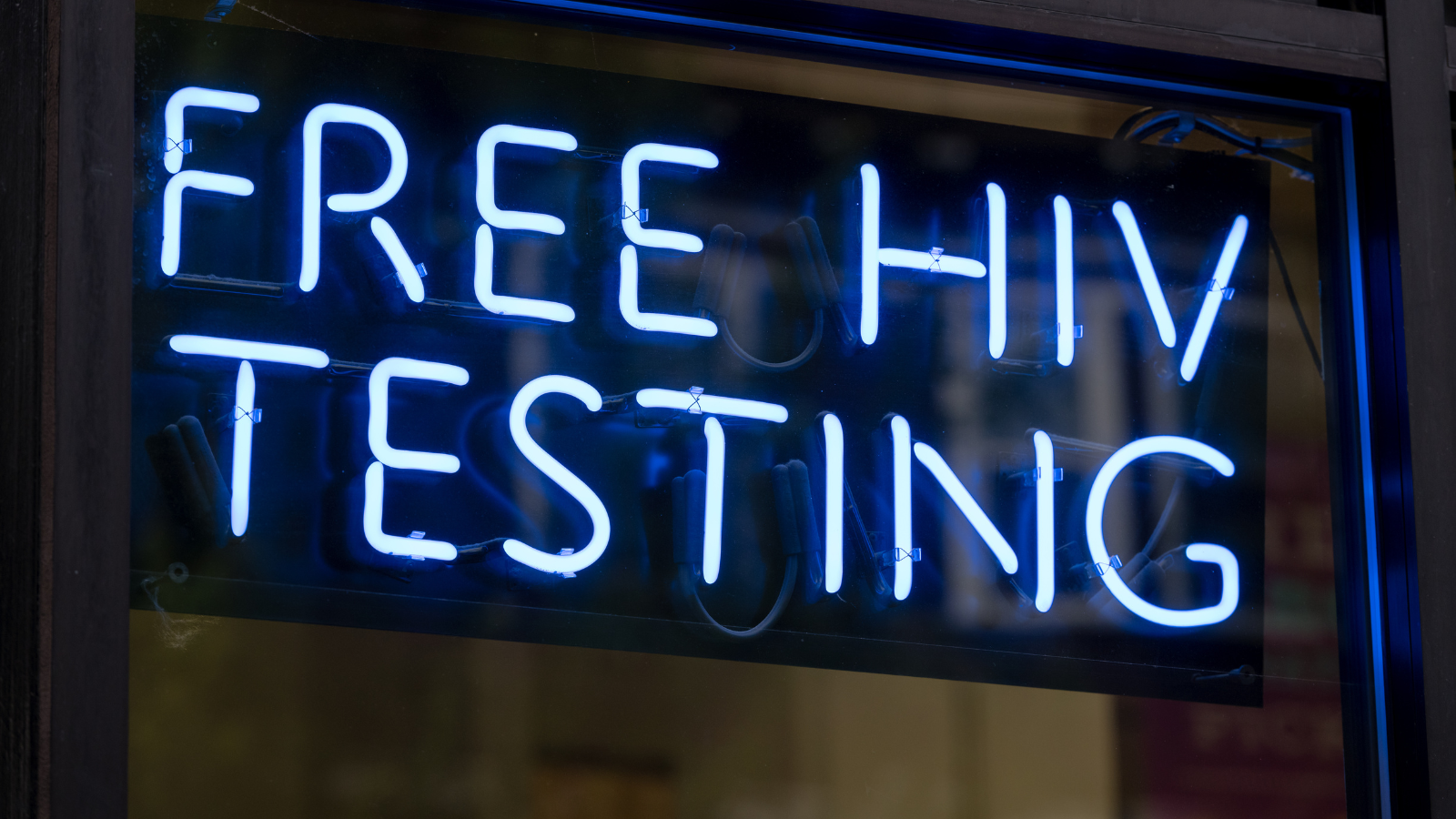
The only way to tell you have HIV is get tested. Testing is recommended at least once for everyone, and may be recommended more often for some. Testing can be quick, easy and confidential—and free. Knowing your HIV status has two important benefits. First, if you are HIV positive, you can get treatment, care and support services as soon as possible. Second, if you know you are infected, you can take precautions to not pass on HIV to others.
Who should get tested for HIV and how often?
The Centers for Disease Control and Prevention (CDC) recommends that everyone ages 13 to 64 get tested for HIV at least once in their lifetime.
If you’re not on PrEP and have had condomless sex since your last HIV test, you might want to test again before you have condomless sex with a new partner. If both of you get tested, you can decide together what prevention methods you need.
People who are more likely to be exposed to HIV may want to be tested more often. These include:
- men who have sex with men (MSM)
- transgender people who have sex with men
- people who have had a sexually transmitted infection recently (STI)
- people who use injection drugs
- people who have had more than one sexual partner since their last HIV test
If you or your partner fall into any of these categories, you might want to test for HIV once a year or even every 3 to 6 months.
If you are pregnant, talk to your OB/GYN about HIV tests. Testing early in pregnancy is important. Many states require pregnant patients get tested.
Are there different kinds of HIV tests?
Yes. There are three types of HIV tests: antibody tests, antigen/antibody tests, and nucleic acid amplification tests (NAATs).
Most rapid and at-home tests are antibody tests. Antibodies are proteins your immune system makes to protect you from a virus. These tests look for HIV antibodies in your blood.
An antigen is a foreign invader (usually a bacteria or virus) that activates your immune system. People who are infected with HIV will have a specific antigen called p24 in their blood. A combined antibody/antigen test uses blood taken from your arm to look for both the p24 antigen and HIV antibodies. This can be helpful because antigens show up sooner after infection.
A NAAT test or nucleic acid tests looks for the actual virus in your blood. It is the most accurate, but it can be expensive. NAAT tests are more often used for checking viral loads than for diagnosis.
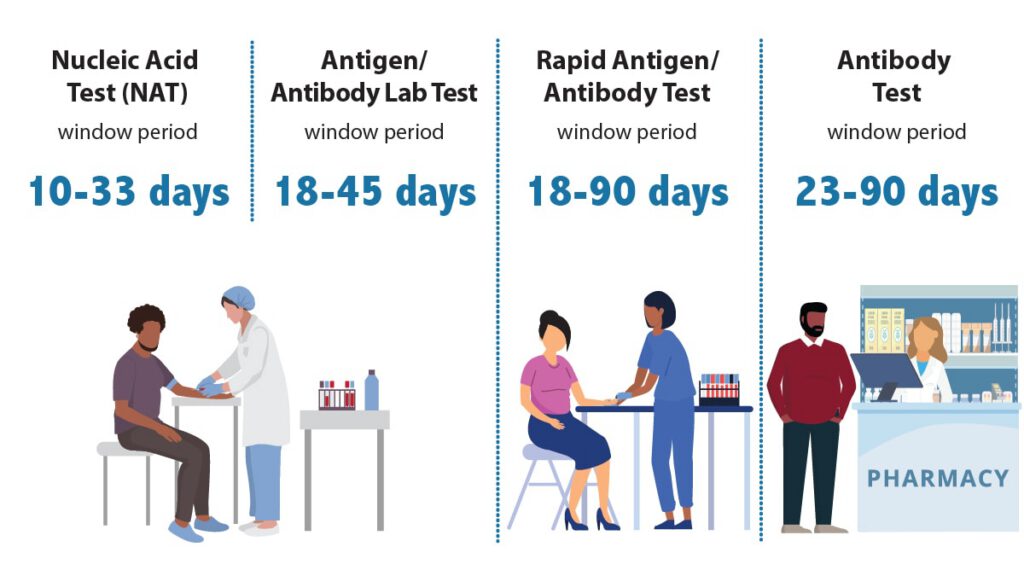
The biggest difference between these tests is how long you have to wait for an accurate result. An antibody test can detect infection 23–90 days after exposure. An antigen/antibody test can detect infection 18–45 days after exposure if you had blood draw from your arm or 18–90 days if you’re using a finger prick sample. A NAAT test can tell whether you have HIV between 10 to 33 days after exposure.
What is the window period for HIV tests?
The window period is the time gap between when you are exposed and when a test can detect the virus. Window periods vary from 10 to 90 days depending on which test you are using, but they also vary from person to person.
If you do have HIV, you are very contagious during the window period. If you think you may have been exposed to HIV, it is important not to have condomless sex or share needles until the window period has ended and you get tested.
Window Periods for Different Types of HIV Tests
If I test negative for HIV does that definitely mean I don’t have it?
No. If you test too soon after exposure, you may not get accurate results. Depending on which test you use, you have to wait between 10 and 90 days before you can be confident in the results.
If I test negative for HIV does that mean my partner doesn’t have it either?
No. Your partner needs to get tested for HIV to know if they have it. It is possible that your partner has HIV and you don’t or that you have HIV and your partner doesn’t even if you’ve had sex with each other multiple times.
Can I get a free HIV test?
Yes. There are many places that offer free HIV testing. You can check with your local health department to see if they offer free in-person testing. Together TakeMeHome offers free at-home tests. If you live in the United States (including Puerto Rico), are 17 or older, and have not ordered from Together TakeMeHome in the past 90 days, you are eligible to receive a pack of two HIV self-tests. You can take one test and give the other to a partner or friend.
What if I test positive?
Don’t panic. Testing positive for HIV can be scary, but today’s treatment means you can live a long, healthy life. The most important thing is that you get treatment as soon as possible.
You can start by asking your health care provider if they can treat you for HIV. If not, they can hopefully refer you to someone nearby. There are other ways to find an HIV care provider.
- Ryan White HIV/AIDS Program. This program provides care and support to low-income people living with HIV. You can find a Ryan White site near you.
- Your state may also have an HIV/AIDS hotline that can help you find services.
- You could find a health center near you. You can search this list by zip code.
- You could also look at this list of health care providers across the country who specialize in HIV care, created by the American Academy of HIV Medicine.
- There are also online telehealth companies that can prescribe and manage HIV treatment.
Learn More About HIV