Fewer Women Are Getting Prenatal Care
(and Missing an Important Chance to Prevent Congenital Syphilis)

A pregnant person kneels on the floor

New federal data finds that fewer pregnant people in the United States are getting prenatal care early in pregnancy. Early prenatal care doctors find pregnancy problems, like gestational diabetes and pre-eclampsia, early. It can also help prevent rising congenital syphilis rates by testing and treating infections early.

According to the new report by the Centers for Disease Control and Prevention (CDC), the percentage of pregnant patients who received care during their first trimester dropped from 78.3% in 2021 to 75.5% in 2024. Most patients who didn’t start early, do start prenatal care in the second trimester. However, the report also found that 7.3% of pregnant patients in 2024 didn’t receive care until very late in their pregnancy or received no care prenatal care at all. This is up from 6.3% in 2021.

Some States and Communities Saw More Declines in Prenatal Care

The decline in early prenatal care hit some communities harder. including Native Hawaiian and Pacific Islander women, Black women, and Hispanic women. In 2024, less than half of Native Hawaiian and Pacific Islander expectant mothers had prenatal care in the first trimester. 

There were also differences between states. The percentage of patients who received late or no care increased in 36 states and Washington, DC. In five states—Florida, Georgia, Hawaii, New Mexico and Texas—more than 1 in 10 mothers received late or no care.

“Babies of mothers who do not get prenatal care are three times more likely to have a low birth weight and five times more likely to die than those born to mothers who do get care.”

Why Prenatal Care is Important

Prenatal care throughout pregnancy can help doctors find and treat health issues. Patients who have a UTI, for example, can be given antibiotics. Those who have high blood sugar may be put on a strict diet. And those who are at risk for pre-eclampsia—a condition that causes dangerously high blood pressure late in pregnancy—may be told to take a daily baby aspirin to lower their risk.

How Prenatal Care Can Prevent Congenital Syphilis

Similarly, patients who test positive for syphilis can be treated before they risk passing it to their baby. Syphilis is a sexually transmitted infection caused by bacteria. If a pregnant patient has syphilis, they can pass that infection to their baby. This is called congenital syphilis, and it can be dangerous.

Congenital syphilis can cause miscarriage, stillbirth, and even infant death. Babies born with syphilis can face lifelong medical issues. Public health experts recommend that all pregnant patients be tested for syphilis at their first prenatal appointment and then again before birth. Patients who test positive can be treated with antibiotics.

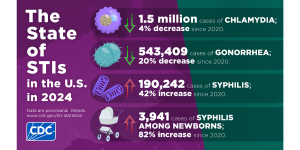
Unfortunately, congenital syphilis has been rising in recent years. There were 3,755 babies born with congenital syphilis in 2022 alone. This is over 10 times more babies than were born with syphilis in 2012. Congenital syphilis is more likely in people who haven’t received prenatal care.

Why Prenatal Care is Declining

The new CDC study did not look at why fewer pregnant patients are getting early prenatal care, but there are likely many factors. Some women may not have health insurance and not be able to pay for care throughout their pregnancy. Others may not be able to find a provider close to home.

A 2024 March of Dimes report found that over a third of U.S. counties don’t have a single doctor, nurse, midwife, or medical center specializing in maternity care. These areas are called “maternity care deserts.”

Public health experts are urging pregnant women to seek early prenatal and calling on states and the federal government to help address the barriers to care.

More to Explore