Is that sore or rash actually genital herpes? Can you tell by just looking? Can a healthcare provider? No! When it comes to diagnosing genital herpes, it takes more than a look.
There are different tests available for herpes. Viral culture and DNA tests can be done if you are experiencing symptoms. Blood tests are available for people who may not have had symptoms or if the signs have already healed.
Who should be tested for herpes?
Herpes testing isn’t recommended routinely like other STIs (such as chlamydia and gonorrhea). It is only people who have symptoms or concerns (such as a partner with herpes).
The Centers for Disease Control and Prevention (CDC) says that blood tests might be useful for people who:
- have genital symptoms that could be related to herpes
- have (or have had) a sex partner with genital herpes
- have been told by a provider that they have signs of herpes but need a test to confirm it
There are limitations to blood testing for HSV. According to CDC, testing may be inaccurate if done too soon after an infection. The recommend testing at least 12 weeks after a suspected infection. A wrong result is also possible when the person has a low risk of infection.
Testing with symptoms
The best way to test is when symptoms are present. When a person has active herpes lesions (a.k.a. blisters, sores, ulcers), a swab can be taken and tests done that can detect the virus directly.
The tests used include culture and Nucleic Acid Amplification Testing (NAAT). Both culture and NAAT tests can identify the specific herpes virus type someone is infected with, but NAAT methods are more sensitive. Culture can easily miss infections and give false negative results.
Because a culture works by requiring virus that is active, if a lesion is very small, or is already beginning to heal, there may not be enough virus present for an accurate culture. Beyond 48 hours of the symptoms appearing, there is a risk of receiving a false negative test result. Viral culture is even less accurate during recurrences (positive in only about 30% of recurrent outbreaks).
NAAT methods are the preferred method, with PCR as the most-widely used NAAT method. These tests are fast, accurate, and can tell if a person has HSV-1 or HSV-2. There is also less chance of a false negative result with NAATs.
Testing with no symptoms
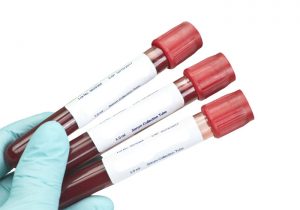
Blood tests can be used when a person has no visible symptoms but has concerns about having herpes. Blood tests do not actually detect the virus; instead, they look for antibodies (the body’s immune response) in the blood.
IgM vs. IgG
When an individual contracts herpes, the immune system responds by developing antibodies to fight the virus: IgG and IgM. Blood tests can look for and detect these antibodies—not the virus itself. IgG appears soon after infection and stays in the blood for life. IgM is actually the first antibody that appears after infection, but it may disappear thereafter.
IgM tests are not recommended for several reasons:
- IgM tests can’t accurately distinguish between HSV-1 and HSV-2 antibodies, and can very easily provide a false positive result for HSV-2. A person who only has HSV-1 may receive a false positive for HSV-.
- IgM tests sometimes cross-react with other viruses in the same family, such as varicella zoster virus (VZV) which causes chickenpox or cytomegalovirus (CMV) which causes mono, meaning that positive results may be misleading.
- Some assume that if a test discovers IgM antibodies, the infection is new. But research has shown this is not the case. IgM can appear in blood tests in up to a third of people during recurrences (outbreaks) in people who have been infected for some time. IgM tests can also be negative in up to half of people who have a new infection confirmed by swab testing.
IgM tests can lead to deceptive test results, as well as false assumptions about how and when a person actually acquired HSV. For this reason, we do not recommend using blood tests as a way to determine how long a person has had herpes. Unfortunately, most people who are diagnosed will not be able to determine how long they have had the infection.
More accurate herpes blood tests detect IgG antibodies. Unlike IgM, IgG antibodies can be accurately broken down to either HSV-1 or HSV-2. The challenge here is that the time it takes for IgG antibodies to reach detectable levels can vary from person to person. For one person, it could take just a few weeks. For another, it could take a few months for another. So even with the accurate tests, a person could receive a false negative if the test is taken too soon after contracting the virus.
For the most accurate test result, it is recommended to wait 12 – 16 weeks from the last possible date of exposure before getting an accurate, type-specific blood test in order to allow enough time for antibodies to reach detectable levels.
There are limitations to blood testing for HSV. As mentioned, testing may be inaccurate if done too soon after an infection. A wrong result is also possible when the person has a low risk of infection.
Additionally, a blood test can’t determine whether the site of infection is oral or genital. Nearly all cases of oral herpes are caused by HSV-1, but that type can also cause genital herpes. A blood test alone can’t tell you whether an HSV-1 infection is oral or genital. However, since most cases of genital herpes are caused by HSV-2, a positive result for type-2 antibodies most likely indicates genital herpes.