

Could Monkeys’ Behavior Explain Why Men Masturbate?
A new paper, published in the Proceedings of the Royal Society B, suggests that there are biological and evolutionary reasons that we masturbate and looks to our ape ancestors for evidence. Evolutionary biologist Matilda Brindle and her colleagues at the University of London, reviewed decades of literature on animal masturbation and surveyed others who research this behavior to determine why primates would do something that seems evolutionarily foolish or at least unnecessary.
There is evidence starting around 40 million years ago that the ancestors of all monkeys and apes did indeed masturbate and Brindle had two theories about why early apes would “waste” their genetic material instead of saving it for partners who could carry on their blood lines? Both theories were ultimately supported by the research.
The first theory is that male monkeys masturbate to keep the plumbing working so that they’d be ready if/when they had to compete for the attention of a female. This theory is supported by the fact that masturbation was more common in species in which females mate with multiple males. In contrast, the art of masturbation was sometimes lost in species with monogamous partners. Exactly why they adopted this strategy is still unclear, but the researchers suggest it might have been a way to get rid of “stale sperm.”
Brindle’s other theory had to do with STIs. She hypothesized that primates might use masturbation as a way to clear germs from their reproductive tracts after sex. This was also supported by research because primates in areas or species with higher prevalence of pathogens were more likely to masturbate than those facing lower prevalence. She also noted that masturbation was observed more in large apes who weren’t able to reach their penises with their mouths for cleaning.
This is all really interesting, but there’s also the simple explanation that masturbation feels good for men and, apparently, monkeys.
Not surprisingly, the researchers found very little evidence that would allow them to draw conclusions about female monkeys masturbating. This may say more about man as the observer, however, than it does of the apes themselves. As Brindle pointed out, the research world has long seen women—human or not—as “the passive recipients of men’s sexual behavior.” On a purely practical level, humans are usually observing primate behavior from a far and it can be easier to see/identify male masturbation for what it is.
Brindle believes the stigma of studying masturbation is slowly lifting and that we will have more data on other species, and hopefully on some females, very soon.
More to Explore

Mpox Is Still Spreading in the U.S.
Mpox used to be rare in the United States. Before 2022, most cases were in people who’d traveled internationally or who’d had had contact with animals imported from other countries. That changed with the global mpox outbreak that began in 2022. That year, there were about 30,000 cases of mpox in this country.

Federal Government Invests $4 Million to Prevent Syphilis in Newborns
The U.S. Department of Health and Human Services (HHS) is investing $4 million to expand rapid syphilis testing. The goal is to find and treat more cases of syphilis during pregnancy to prevent congenital syphilis and its complications.

ACOG Recommends Removing Fallopian Tubes Instead of Tubal Ligation
Studies show that removing fallopian tubes can reduce a person’s lifetime risk of ovarian cancer by as much as 78%. Based on this evidence, ACOG issued new guidelines encouraging doctors to remove fallopian tubes in certain situations, including for birth control.
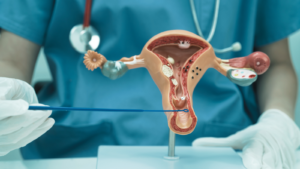
BV and STIs Often Happen at the Same Time
A new study adds to growing evidence that bacterial vaginosis (BV) and sexually transmitted infections (STIs) often occur together.

Doxy PEP Becoming Less Effective Against Gonorrhea
A new study found that while doxy PEP provides strong protection against chlamydia and syphilis, its ability to prevent gonorrhea has rapidly declined. Researchers believe that growing antibiotic resistance may be one reason why.

CDC Offers Guidance on Sexually Transmitted Ringworm (TMVII)
CDC is is asking clinicians across the to pay close attention to possible infections caused by sexually transmitted ringworm—TMVII.