Protected: What You Need to Know
There is no excerpt because this is a protected post.

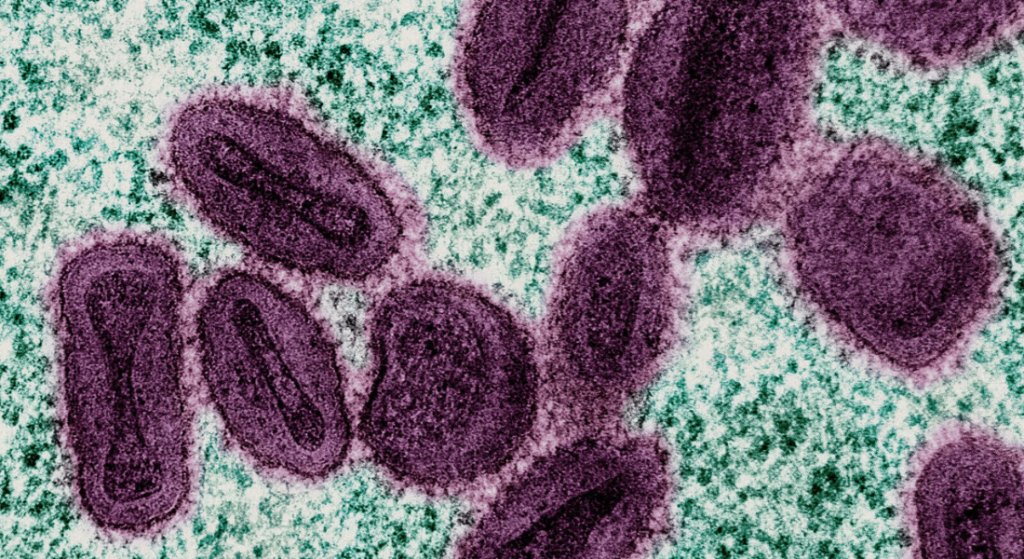
A case of a potentially more serious version of mpox that has been spreading quickly in Africa has been confirmed in California. The individual who was diagnosed had recently traveled to East Africa. With this announcement, the United States joins Germany, India, Sweden, Thailand, and the United Kingdom as countries outside of Africa that have seen cases. All of these cases, however, have involved travelers, and the only local transmission has occurred between these travelers and members of their own households.
The Centers for Disease Control and Prevention (CDC) says that the risk of local transmission in the U.S. remains small but is telling travelers to be careful and clinicians to keep their eyes open for symptoms.
There are two main types of mpox; clade I and clade II. In 2022 there was a global outbreak of mpox caused by a clade II virus with over 100,000 cases reported across 122 countries. Much of the spread was linked to sexual transmission between gay, bisexual, and other men who have sex with men.
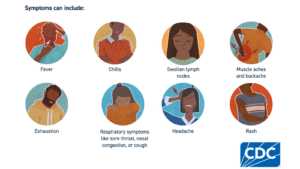
These infections were usually mild. The primary symptoms of clade II mpox is a rash that looks like pimples or blisters and appears on the hands, feet, face, genitals, or anus. Other flu-like symptoms such as headache, muscle aches, swollen lymph nodes, chills, and fatigue are also common. The fatality rate of clade II viruses is less than 1%.
Clade I mpox, on the other hand, often causes more serious symptoms and has had a fatality rate between 3% and 11% in the past. Past outbreaks were also often limited to those who had direct contact with infected animals either through butchering or eating meat.
The current clade I outbreak, which began in the Democratic Republic of the Congo (DRC), seems to be different. It is being passed from person-to-person including between family members who live together, from patients to caretakers/ health care providers (when protective gear isn’t available), and through sexual contact.
There have been over 15,000 cases and 500 deaths from mpox in DRC since this summer, and it spread quickly to other countries in the area. About half of the cases and three quarters of the deaths have been among children. The good news is that the infections seem to be less serious than in past outbreaks. In places where people can get appropriate care, the fatality rate is around 1%.
While there have been cases reported outside of Africa, they have been associated with travel to impacted areas. The same is true of the newly reported case in California. The individual had recently traveled to East Africa. According to the CDC, the individual had only mild symptoms and there is no evidence that anyone else has been infected.
The risk of clade I mpox in the United States remains low. The CDC is advising travelers to areas affected by the outbreak to take precautions and monitor symptoms carefully. The agency is also asking health care providers to watch for symptoms of mpox, ask patients if they’ve travelled recently, and test for mpox when appropriate.
The JYNNEOS vaccine can protect people against mpox. The CDC now recommends that people traveling to countries with Clade I outbreaks get two doses of the vaccine before they go. Because Clade II mpox is still circulating in the United States, the CDC also recommends two doses of the vaccine for who anyone who anticipates experiencing sex with a new partner; sex at a commercial venue (such as a sex club or bathhouse); sex in exchange for money or drugs; or sex at a large public even (such as a rave or festival).
Mpox spreads through close contact with the rash, respiratory droplets, or sheets/clothing that have come into contact with the rash. The CDC credits both the vaccine and behavior changes among men who have sex with men for preventing the 2022 outbreak from spreading even further in this country.
There is no excerpt because this is a protected post.

A new report shows that fewer women are getting prenatal care. That means too many patients are missing the chance to prevent congenital syphilis.

Condoms. All sorts of shapes, sizes, colors (even glow-in-the-dark). Ribbed or plain. Lubed or not. Latex or plastic. ASHA’s Fred Wyand shares his thoughts on this reliable way to prevent STIs and pregnancy.

Syphilis rates in pregnant women went up 222% percent between 2016 and 2022 and another 28% between 2022 and 2024. This alarming increase shows too many pregnant women are not being screened.

Currently, condoms are the only widely available, proven method for preventing pregnancy and reducing transmission of HIV and other sexually transmitted infections (STIs) during sex. Condoms work.

At the end of 2025, the American Cancer Society released its new cervical cancer screening guidelines. In January 2026, the Health Resources and Services Administration endorsed a new set of guidelines as well. Both suggest HPV screening with self collected samples is an acceptable option.

Research suggests that only one dose of the HPV vaccine may be effective enough to prevent HPV-related disease, including cancer.

Australia has been a leader in HPV-prevention and cervical cancer screening for decades. Because of this, it is now close to eliminating cervical cancer entirely. However, recent drops in vaccination and screening rates threaten this progress.
ASHA believes that all people have the right to the information and services that will help them to have optimum sexual health. We envision a time when stigma is no longer associated with sexual health and our nation is united in its belief that sexuality is a normal, healthy, and positive aspect of human life.
ABOUT
GET INVOLVED
ASHA WEBSITES
GET HELP
© 2026 American Sexual Health Association
We need to know if we can keep you company during this visit. We are useful for making this site work.
We use cookies to enhance your browsing experience. You can choose which cookies you want to accept.
Necessary cookies help make a website usable by enabling basic functions like page navigation and access to secure areas. The website cannot function properly without these cookies.
| Cookie | Provider | Purpose | Expiry |
|---|---|---|---|
digiconsent | This website | Stores your cookie consent preferences. | 1 year |
wordpress_logged_in_* | WordPress | Identifies logged-in users and their authentication details. | 14 days / Session |
wordpress_sec_* | WordPress | Stores authentication details for secure areas. | 14 days / Session |
wp-settings-* | WordPress | Stores user interface customization preferences. | 1 year |
wp-settings-time-* | WordPress | Stores the time when wp-settings cookie was set. | 1 year |
Analytics cookies help us understand how visitors interact with our website by collecting and reporting information anonymously. This helps us improve our website.
| Cookie | Provider | Purpose | Expiry |
|---|---|---|---|
_ga | Registers a unique ID to generate statistical data on website usage. | 2 years | |
_ga_* | Used by Google Analytics to store and count pageviews. | 2 years |
Marketing cookies are used to track visitors across websites. The intention is to display ads that are relevant and engaging for the individual user.
Functional cookies enable the website to provide enhanced functionality and personalization. They may be set by us or by third party providers.