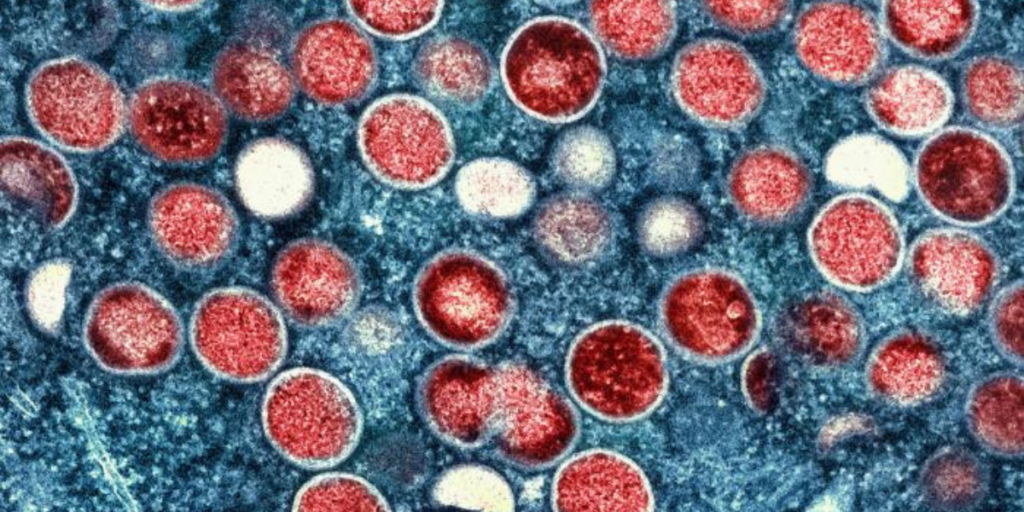
A more serious type of mpox may be spreading California. Three people in the state were hospitalized with the virus. None of them had traveled outside the country recently. California public health officials agree that this suggests local person-to-person transmission. There was a major outbreak of mpox in this country in 2022, but it involved a different type of the virus which is less likely to cause serious health issues.
Types of Mpox
Mpox is related to the smallpox virus. Researchers have identified two main types of the virus called clade I and clade II. The worldwide outbreak in 2022 was caused by a clade II type. Most of the cases in that outbreak were passed among men who have sex with men (MSM) through sexual activity and close physical contact. Clade II mpox typically causes mild infections and has a fatality rate less than 1%.
Clade I mpox causes more serious illness and has a fatality rate around 10%. This type of the virus has been found in the Democratic Republic of Congo (DRC) for many years. Until recently, most cases were passed directly from animals to humans through butchering and eating. A new outbreak that began in the DRC in 2023 is spreading from person to person.
In some places in Africa, this clade I virus is being spread between family members through daily household activities. It is also being spread in patient care settings when appropriate protective gear is not available. In these areas many cases have been reported in children under the age of 15.
In other areas, sexual transmission is more common. This is the first time that clade I mpox has been sexually transmitted. Most cases are being passed through heterosexual sex. Many cases have been observed in sex workers, truck drivers, and other transient workers.
Current Clade I Outbreak
There have been more than 40,000 cases of clade I mpox in several countries in Central and Eastern Africa. There have also been cases in other countries, but most have been in people who had recently traveled to Africa.
Until now, there had been only six reported cases of clade I mpox in the United States. All of them had been in people who had recently traveled. The three new cases in California—one in Long Beach and two in Los Angeles County—are in people who have not traveled recently. Public health officials have not been able to find a direct link between them. This suggests local spread.
Public health officials are working closely to identify potential sources of transmission. They’re also working to understand how serious this type of the virus may become here. It is possible that access to better health care will mean better outcomes for cases in this country than those in other parts of the world.
Preventing Mpox
The risk of clade I mpox remains low in the U.S., but experts want health care providers to be on the lookout for symptoms of mpox. People at higher risk for mpox need to stay vigilant as well. It’s also important to remember that there are still cases of clade II mpox in the U.S. though numbers are far lower than they were in 2022.
There is a vaccine called JYNNEOS that can prevent mpox. The CDC recommends the vaccine for:
Gay, bisexual, transgender, or other men who have sex with men who have had (in the last six months) or expect to have:
- One or more sexually transmitted infections
- More than one sexual partner
- Anonymous sexual or intimate contact
- Sex at a commercial sex venue
- Sex in association with a large public event in a geographic area where mpox transmission is occurring
In addition to suggesting everyone who fit these criteria get vaccinated, the CDC has put out mpox-specific safer sex guidelines. The guidelines remind people that the virus spreads through close face-to-face contact as well as contact with blisters and any fabric that has touched the blisters.
During the 2022 outbreak, gay, bisexual, trans, another MSM changed some of their behaviors. They reduced anonymous sex, had less skin-to-skin contact, and washed all bedding immediately. These, and other changes, were credited with keeping infections lower.
While the risk of a new mpox epidemic remains low in this country, it’s important to stay informed and prepared. We need to do what we can to prevent transmission especially with this more dangerous type.