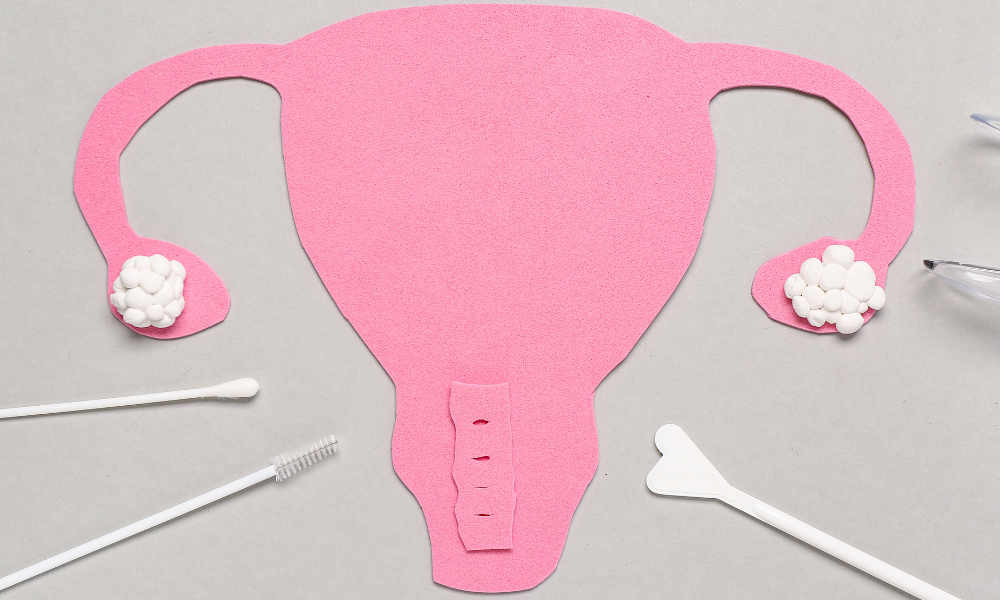
The FDA recently approved HPV testing using self-collected samples. These tests must still be done in a health care provider’s office and sent to a lab for analysis. But experts hope allowing people to collect their own samples will increase screening rates.
HPV testing is an important part of cervical cancer screening and prevention. The HPV test examines cells from the cervix for high-risk types of HPV that have been known to cause cervical cancer. HPV testing is sometimes done by itself and sometime coupled with a Pap test. The Pap test examines cells from the cervix for precancerous changes. If found, these changes can be treated to prevent cervical cancer from developing.
Both Pap tests and HPV tests have always been done by health care providers, usually gynecologists. These tests are often a part of a pelvic exam, and providers may use a speculum to hold the vagina open while they collect the cells.
The National Cancer Institute partnered with medical schools and cancer centers across the country to look at the effectiveness of self-collected samples. Tests for other things—from COVID to STIs—rely on self-collected samples, so we know that people are willing to swab themselves. Still, researchers had to make sure that the samples people collected on their own were good enough to be tested.
Based on success in that research, the FDA has now approved two self-collection tests. These are not home tests. They have to be ordered by a doctor who will give directions, send the sample to a lab, and receive the results. But no examination is required. A person can simply be given the kit and a private space to collect a sample.
New Options for Screening
This opens up many more possibilities for cervical cancer screening. People will now be able to get tested at their primary care provider’s office, an urgent care clinic, a mobile clinic, or even in some pharmacies. This could be particularly helpful for people who don’t have access to a gynecologist, or those who don’t feel comfortable with vaginal exams.
We know that screening—whether done with a Pap test, an HPV test, or both—can dramatically reduce a person’s risk of getting this cancer. Cervical cancers deaths have dropped by over half since the 1970s because of widespread screening. In recent years, however, the number of people who should have been screened but haven’t has gone up. One study found that in 2005 only 14% of eligible people were overdue for screening but by 2019 this had gone up to 23%. That study also found that screening rates were lowest among Asian and Hispanic women, women who live in rural areas, those who don’t have insurance, and those who identify as LGBTQ.
By removing barriers like location and embarrassment, self-collection may increase the number of people who get screened on schedule. The next step would be a test that can be collected at home and sent to a lab without a visit to any health care provider. The FDA is looking at data from research on home-testing, and this kind of test might be available soon.