Public health officials in England announced that they have identified a new combined type of mpox in a person who had recently traveled to Asia. No information about the patient or their condition has been given, but tests show the virus was a unique mix of the two known types of mpox. Experts are concerned about what this means for future spread of the virus.
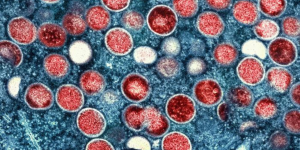
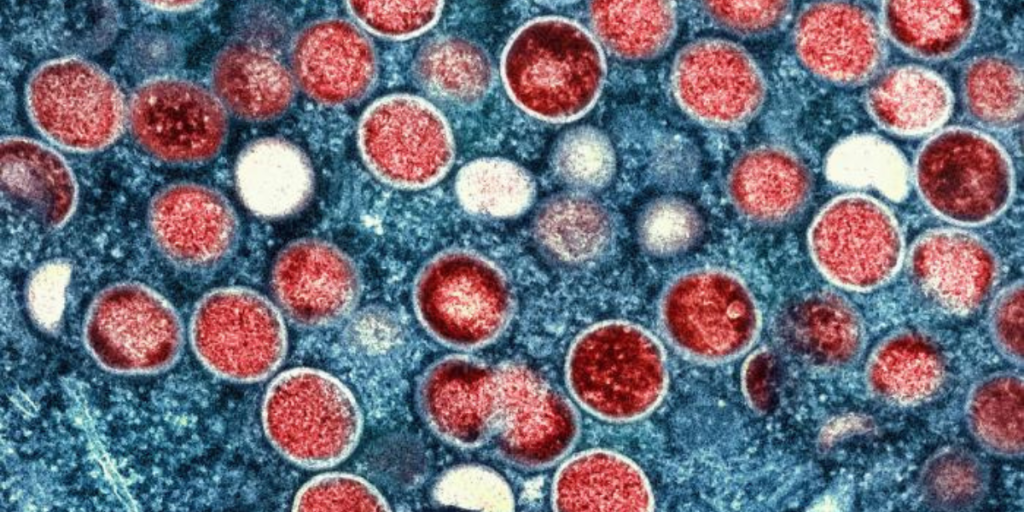
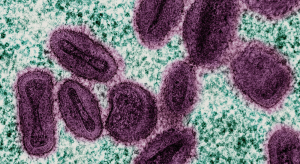
Mpox Virus
Mpox is related to the smallpox virus. The first symptoms are usually fever, headache, muscle aches, and backache. The infection may also cause swollen lymph nodes and exhaustion. A few days after these first symptoms, a rash or sores can appear on the face and then spread to other parts of the body.
Contact with these sores, or fluid from these sores that is left on clothes or bed sheets, can spread the disease. The mpox virus can also be spread through saliva and respiratory secretions (droplets in your breath). This means that it can be passed through kissing and extended close contact.
Types of Mpox
Researchers have identified two types of the virus that are current circulating in various parts of the world—Clade IIb and Clade Ib.
Clade IIb Mpox
Clade IIb mpox it is the type of the virus that spread rapidly around the world in 2022. That outbreak infected 114,000 and caused 220 deaths globally. In the United States, the outbreak peaked in the summer of 2022 with 11,000 cases each month.
Though all mpox originated in animals, Clade IIb mpox has been known to pass from person to person. During that worldwide outbreak, the virus was spread primarily through sexual behavior among men who have sex with men. Clade IIb mpox is less serious. It typically causes mild symptoms and has a 1% mortality rate.
Clade Ib Mpox
Clade Ib mpox causes more serious illness and has a fatality rate around 10%. This type of the virus has been found in the Democratic Republic of Congo (DRC) for many years. Until recently, most cases were passed directly from animals to humans through butchering and eating. A new outbreak that began in the DRC in 2023, however, is spreading from person to person. In some places in Africa, this clade Ib virus is being spread between family members through daily household activities. It is also being spread in patient care settings when appropriate protective gear is not available. In these areas many cases have been reported in children under the age of 15. In other areas, sexual transmission is more common.
This is the first time that clade I mpox has been sexually transmitted. Most cases are being passed through heterosexual sex. Many cases have been observed in sex workers, truck drivers, and other transient workers.
Between January and November of 2025, there were over 48,000 cases of clade Ib mpox reported in Central and Eastern Africa. There have also been about 43 cases of this type of the virus in other countries. A little less than half of those cases were in people who had recently traveled to Africa, but 24 of them were in individuals who had not.
World Health Organization officials now believe that Clade Ib mpox is spreading locally from person to person in Italy, Malaysia, the Netherlands, Portugal, Spain, and the United States.
New Discovery in England
Genomic tests have revealed that the patient in England has a type of mpox that includes elements of Clade IIb and Clade Ib. This is referred to as a recombinant virus because it’s formed by combining genetic materials. Experts say it’s not surprising that they’ve discovered this recombinant version because viruses always evolve and both types of the virus are currently circulating.
The concern is that when viruses evolve it can be harder to prevent further spread. Dr Boghuma Titanji, assistant professor of medicine at Emory University, told the BBC that this was exactly what public health had feared, “The more mpox circulation we permit, the more opportunities the virus has to recombine and adapt, further entrenching mpox virus as a human pathogen that is not going away.”
There is an Mpox Vaccine
There is a vaccine called JYNNEOS that can protect against mpox and smallpox infections. The vaccine is given in two doses, four weeks apart. Vaccination makes the chance of getting and spreading mpox less likely and helps makes symptoms less severe if a person is infected.
The Centers for Disease Control and Prevention (CDC) recommends the mpox vaccine to gay, bisexual, transgender, or other men who have sex with men who have had (in the last six months) or expect to have:
- One or more sexually transmitted infections
- More than one sexual partner
- Anonymous sexual or intimate contact
- Sex at a commercial sex venue
- Sex in association with a large public event in a geographic area where mpox transmission is occurring
A vaccination campaign for people who met these criteria is one of the ways the United States was able to halt the spread of mpox in 2022.
Anyone who meets the criteria and hasn’t been vaccinated should do so as soon as possible. While this new recombinant type of mpox has not yet been seen in the United States both clade IIb and clade Ib are continuing to spread here at low rates.