New Data Show Fewer New HIV Infections Among Gay and Bisexual Men, But Disparities Still Exist

The CDC recently released its 2021 HIV data and there is some good news including a decline in overall new infections, fewer new infections among young gay and bisexual men, increased knowledge of HIV status, wider use of PrEP, and improvements in treatment outcomes for people living with HIV. Nonetheless, the agency notes that we need to do more to reach the goals set out in the National HIV/AIDS Strategy 2022-2025 and the Ending the Epidemic plan especially in the communities hardest hit by the epidemic.

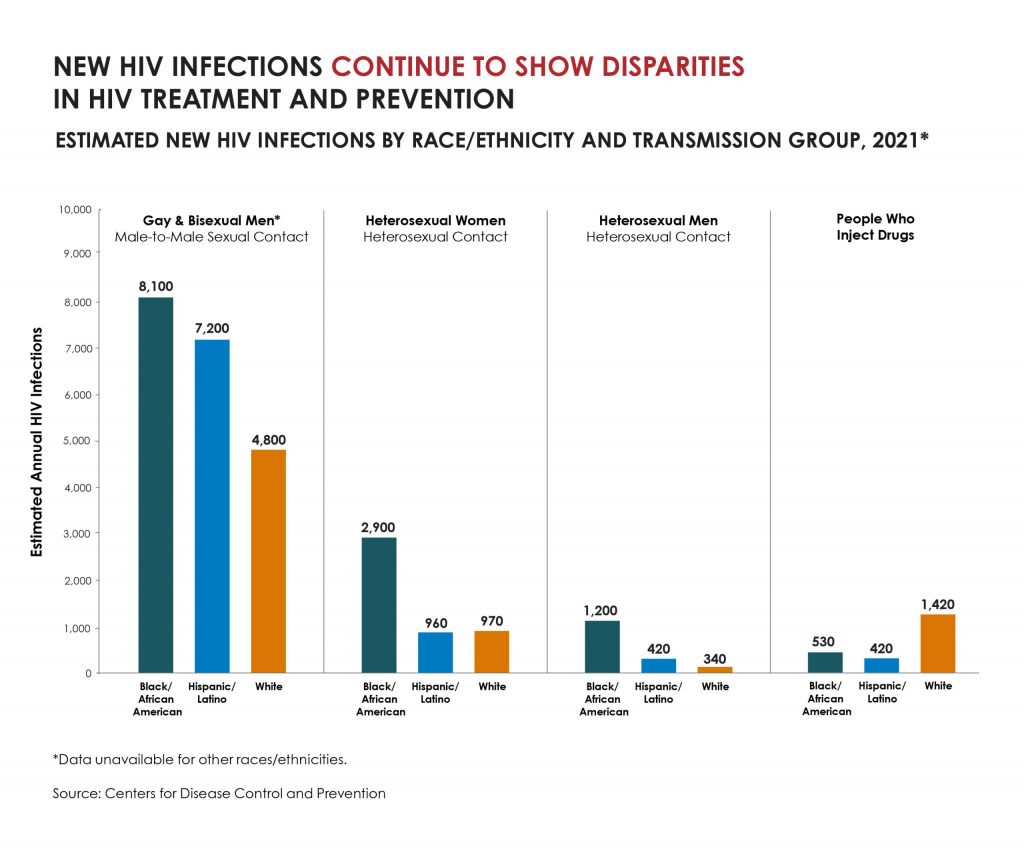
The CDC estimates there were 32,100 new HIV infections in 2021 which represents a 12% drop from 2017. The declines, however, were not felt evenly across all racial and ethnic groups, and men who have sex with men (MSM) continued to have the most new infections.

HIV infections
Source: Centers for Disease Control and Prevention

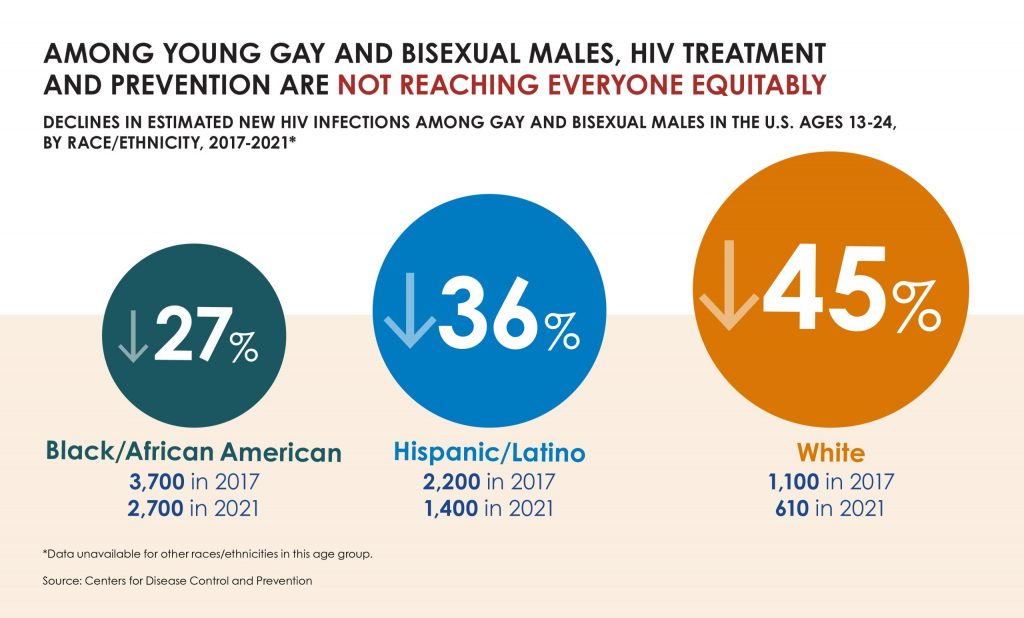
New infections among 13-to-24-year-olds dropped by 34% since 2017. The CDC says declines among young gay and bisexual males (who account for roughly 80% of new infections in this age group) drove the trend, falling from an estimated 7,400 infections in 2017 to about 4,900 in 2021. Even among this age group, however, the progress was not felt equally across all racial and ethnic groups. Declines in new infections among young Black and Hispanic/Latino males were lower than declines among young white gay and bisexual males.

Disparities that hinder HIV prevention
Source: Centers for Disease Control and Prevention

The data suggests that more people in this age group know their HIV status than in 2017 (56% up from 42%) and use PrEP (20% of those who would benefit from it up from just 8% in 2017). Among those in this age group living with HIV, 68% have reached viral suppression compared to 60% in 2017.

Across all age groups the most progress has been seen in the proportion of people using PrEP. The CDC estimates that 1.2 million people could benefit from this prevention strategy yet in 2017 only 13% of this group had been prescribed PrEP. By 2021 this number had jumped to 30%. Again, however, coverage is uneven with far fewer Black or Hispanic people receiving PrEP compared to white people.

Similarly, while overall rates of viral suppression among people living with HIV went up slightly, rates remain unequal. Reaching viral suppression is a sign that a person living with HIV is successfully receiving the ongoing treatment they need.

CDC Director Rochelle P. Walensky said that while the new data shows progress, “Longstanding factors, such as systemic inequities, social and economic marginalization and residential segregation…stand between highly effective HIV treatment and prevention and people who could benefit from them. Efforts must be accelerated and strengthened for progress to reach all groups faster and equitably.”

More to Explore

LGBTQ

LGBTQ — What does it stand for?

Understanding what all the letters stand for in LGBTQ might be a bit confusing. Over time, letters are added and removed to represent an increased awareness and acceptance of sexuality and gender.

NGU

NGU, or Nongonoccocal Urethritis

Nongonococcal urethritis—or NGU—is an infection of the urethra caused by germs other than gonorrhea. The most common cause is chlamydia.

A doctor consoles a patient

HPV-Related Cancer in Men — Stories from Survivors

We know that one important way to raise awareness about HPV-related cancer in men is by sharing stories of those who have experienced it. Here we share stories from three men on their experiences with HPV-related cancer.

Tissues used after a person masturbates

Could Monkeys’ Behavior Explain Why Men Masturbate?

A new paper suggests that there are biological and evolutionary reasons that we masturbate and looks to our ape ancestors for evidence. There is evidence starting around 40 million years ago that the ancestors of all monkeys and apes did indeed masturbate.