Doxy PEP is a New Strategy to Help Prevent STIs
This strategy comes at a time when bacterial STIs are on the rise. Recently released data from the CDC showed there were 2.5 million cases of chlamydia, gonorrhea, and syphilis reported in the United States in 2022. Cases of chlamydia and gonorrhea—the two most common reportable STIs—have remained high for many years, and syphilis cases have skyrocketed recently. The number of primary and secondary syphilis infections in 2022 was 80% higher than in 2018.
Doxy PEP is the first new prevention method for bacterial STIs, and many experts believe it will be an important tool in our fight against this epidemic.
FAQs on Doxy PEP
What is doxy PEP?
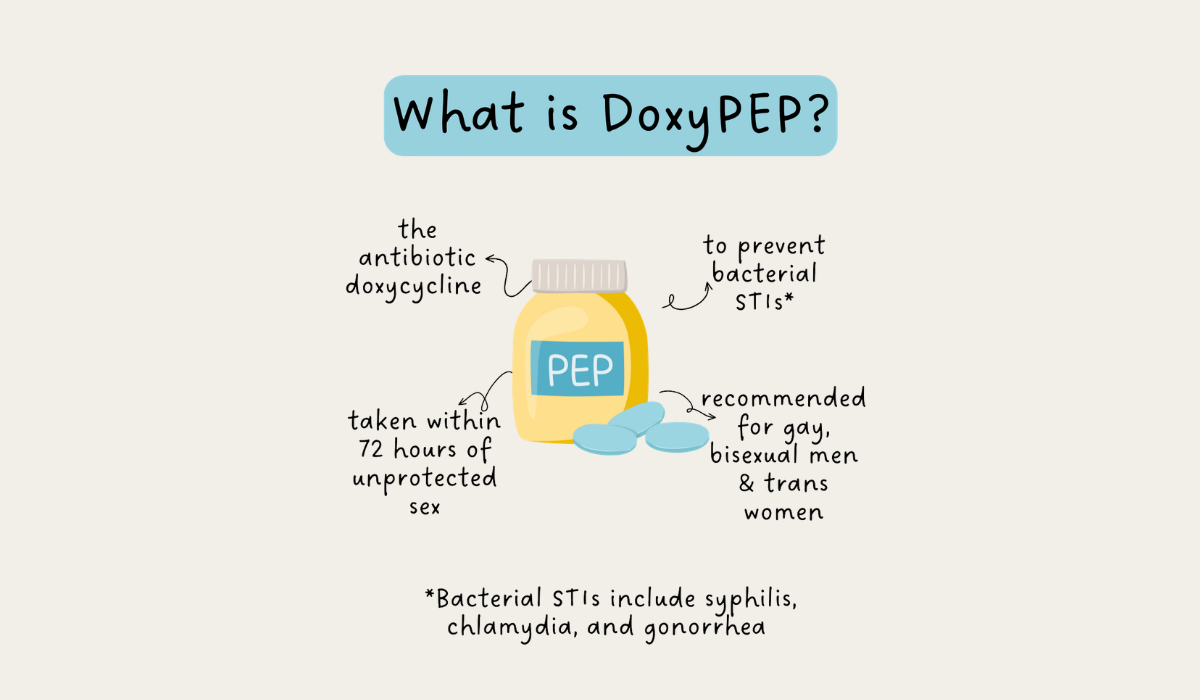
Doxy PEP is the strategy of taking the antibiotic doxycycline after condomless oral or anal sex to prevent chlamydia, gonorrhea, or syphilis.
Who can/should use doxy PEP?
Doxy PEP is intended for adult men who have sex with men and transgender women who have sex with men especially those who have had an STI in the last year. Health care providers may also suggest it to people in this community who have more than one partner.
What about cisgender men who have sex with women and cisgender women, should they use doxy PEP?
Some providers might offer doxy PEP to cisgender men who have sex with women if they’ve had condomless sex with more than one partner, especially if they’ve had a bacterial STI like syphilis in the past year. Research with this group is still ongoing.
So far, research has not found doxy PEP to be effective in preventing STIs in cisgender women who have penis-in-vagina sex. More research is being done on this and other populations like adolescents.
How can I get doxy PEP?
You need a prescription for doxy PEP. You can talk to your health care provider or go to a sexual health clinic like those that offer STI testing. Because you have to take doxy PEP quickly after having condomless sex, it’s a good idea to talk to your health care provider about this before you need it.
How do I use doxy PEP?
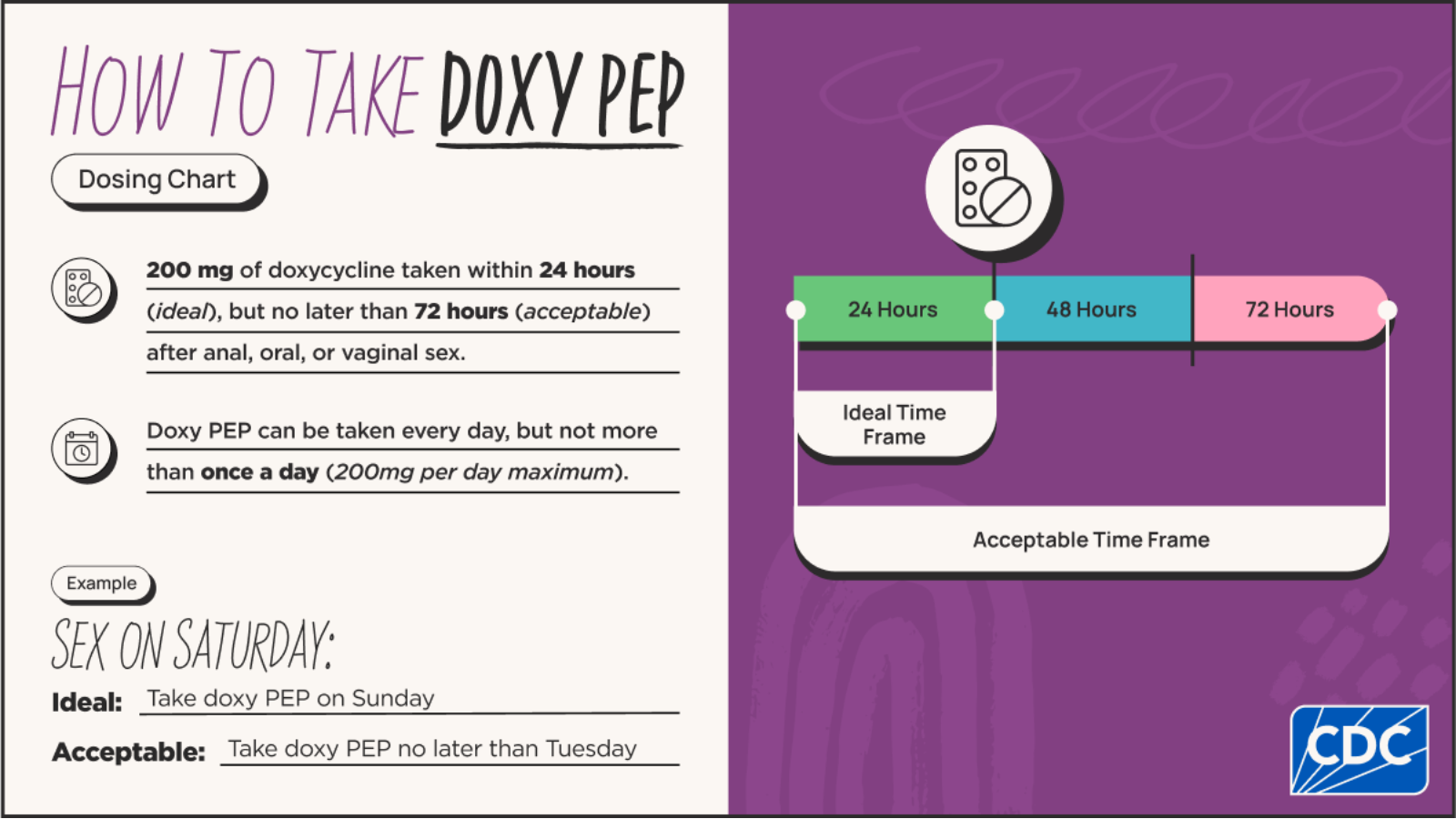
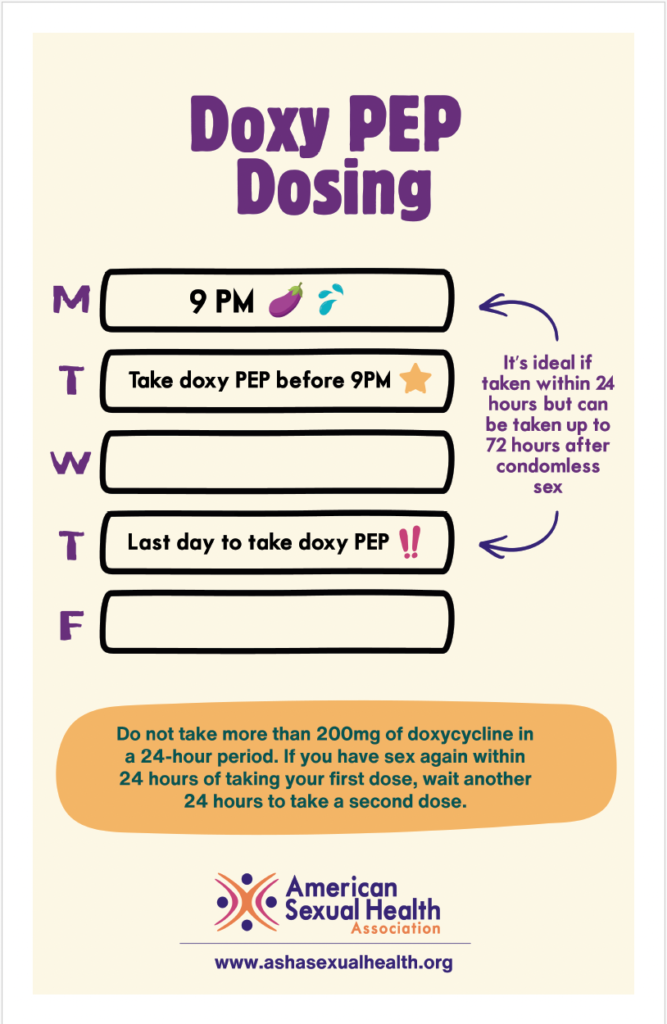
People using doxy PEP take 200 mg of doxycycline (usually two 100 mg pills) within 72 hours of condomless sex though sooner is better. Doxy PEP can be used every time you have condomless sex, but you shouldn’t take more than 200 mg of doxycycline in a 24-hour period.
How much does doxy PEP cost?
Doxycycline is typically inexpensive and usually covered by insurance. Some places may give out doxy PEP for free.
How well does doxy PEP work?
Does doxy PEP have side effects?
Doxycycline is a common antibiotic that many of us have taken for other infections. Like other antibiotics, it may upset your stomach. Take it with lots of water and try not to lie down for half an hour. Doxycycline may also make you more sensitive to the sun so you should try to avoid prolonged exposure while taking it.
Some people may have more serious reactions. Talk to a health care provider if you have other symptoms—like a bad headache or blurred vision—after taking it.
Isn’t it bad to take antibiotics when you’re not sick because of antibiotic resistance?
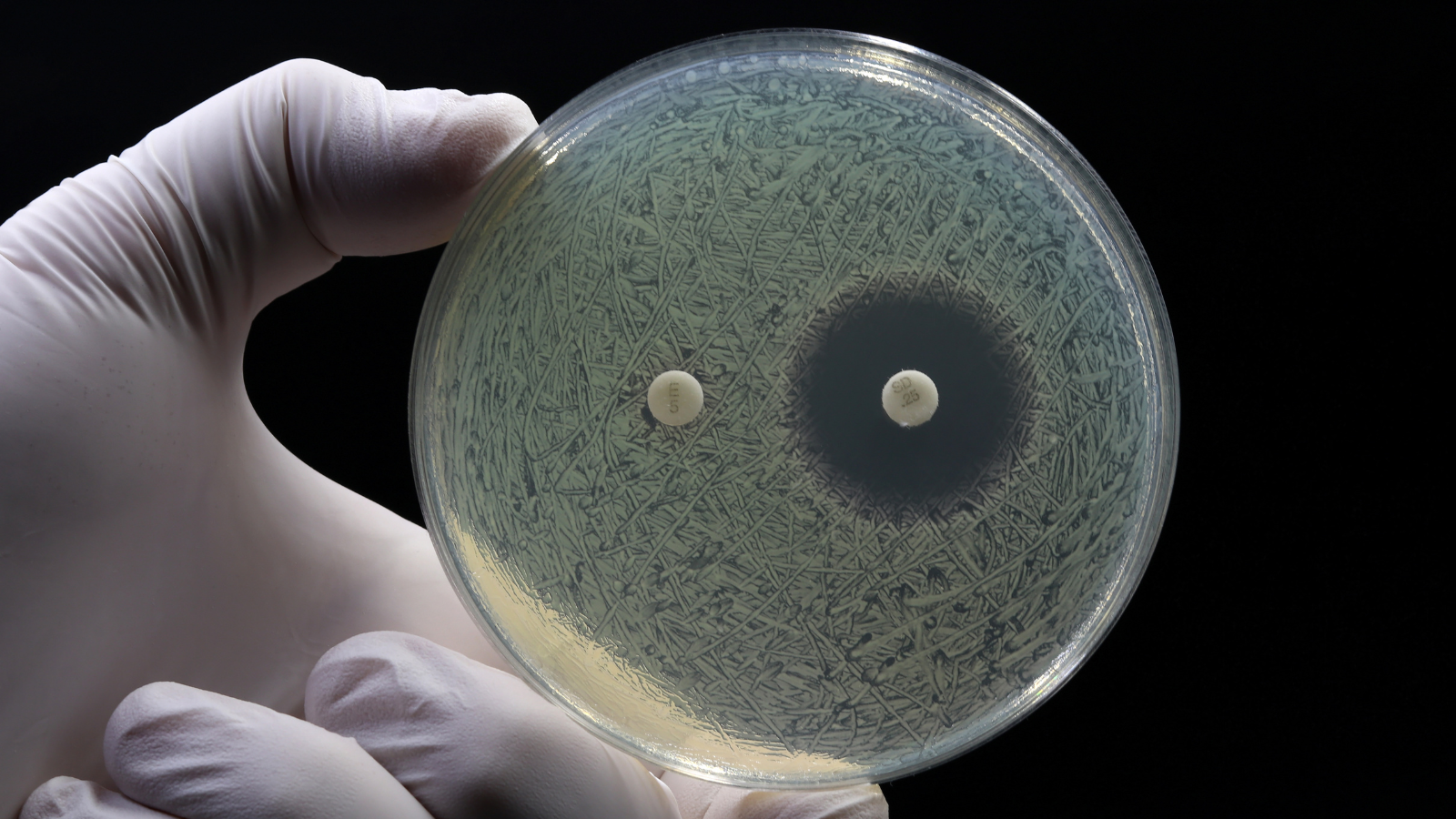
We have been told over the years that overuse of antibiotics is a problem because it can lead to antibiotic-resistant bacteria (infections that don’t respond to the drugs we have to treat them). There has been some research that doxy PEP might already be contributing to the rise of antibiotic-resistant bacteria. Public health experts still support the use of doxy PEP for people with a higher chance of exposure to STIs. But they do say we need to watch this closely.
Gonorrhea is one of the bacteria that has become resistant to some antibiotics. In fact, about 25% of strains of gonorrhea are resistant to doxycycline. This may be why doxy PEP doesn’t work as well against gonorrhea as it does against chlamydia and syphilis.
Does doxy PEP protect against MPox or HIV?
Doxy PEP only protects against bacterial STIs. It does not protect against viruses like MPox, HIV, or herpes. The best protection against MPox is the vaccine. If you think you are at risk for HIV, talk to your health care provider about Post-Exposure Prophylaxis (PEP) and Pre-Exposure Prophylaxis (PREP).
Should I keep getting regular STI screenings even if I’m using doxy PEP?
Yes. It’s important to keep up with STI screenings and to get checked if you have any symptoms. The CDC recommends that MSM be tested for chlamydia, gonorrhea, and syphilis at least annually and more often (every 3 to 6 months) if you are at increased risk because of HIV infection or multiple partners. Talk to your health care provider about how often you should be screened.
Find Doxy PEP
As mentioned above, you do need a prescription to get doxy PEP. You can talk to your own health care provider about doxy PEP or go to a sexual health clinic. You can search for a health clinic near you here with just your zip code.
Real Life Experiences with Doxy PEP
In a series of episodes of our Sex+Health podcast, we talk three people who share their experiences taking doxy PEP. Jaylan Daniels tells us all about doxy PEP and why he chose to include it as part of his health care regimen. Oscar Alexis offers tips for others considering doxy PEP and explains how they’ve helped educate providers about this new prevention method. And Maxfield Haynes discusses how to talk with your provider and how to know if doxy PEP is right for you.
Printable Posters
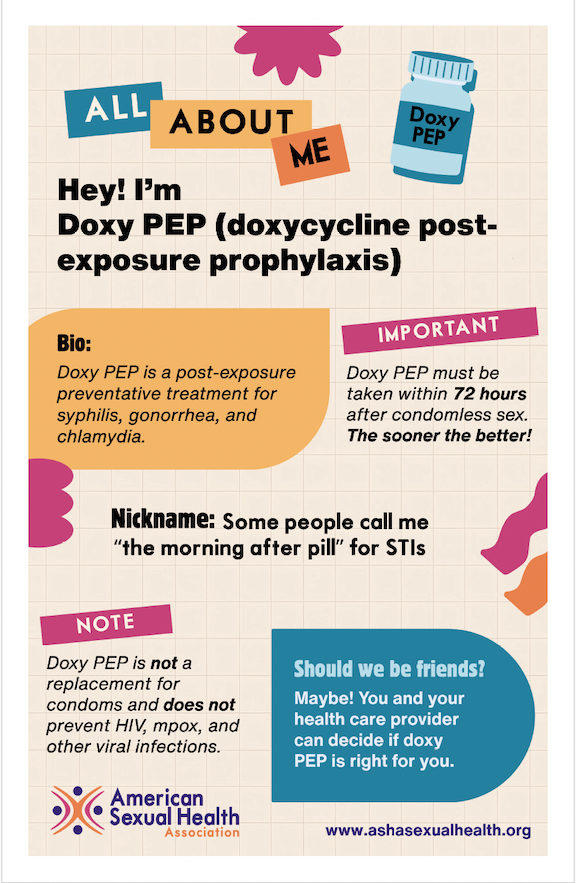
Want to spread the word and educate others about doxy PEP? These printable graphic posters cover the basics on doxy PEP and how to take it. Posters measure 11″ x 17″.
Learn More About Doxy PEP