Preventing HIV
There are so many ways to prevent HIV. You can start by getting tested to learn your status. If you’re negative, you can explore options like PrEP and condoms, to make sex safer and protect against HIV. If you’re positive, you can find a provider and get on treatment to keep your immune system healthy and prevent you from passing on HIV to sexual partners.
Do condoms really work to prevent HIV?
Yes. HIV is transmitted through bodily fluids like semen, blood, and vaginal secretions. Condoms create a barrier that prevents you and your partner from sharing bodily fluids. This protects you from HIV.
Make sure to use a latex or polyurethane condom. Most condoms are made out of these two materials, but there are still some made from lambskin. Lambskin condoms do not protect against HIV. It is important to remember that pre-cum can have HIV in it. Make sure to put the condom on before you start touching genitals and leave it on the whole time. Added bonus: condoms protect against other common sexually transmitted infections (STIs) like chlamydia and gonorrhea.
When we picture a condom, we probably all think of the sheath that is made to roll down over a penis. These are sometimes called male condoms or external condoms (because not everyone who has a penis identifies as male). There is also another kind of condom called an internal condom. These condoms are pouches that are closed on one end. They can be inserted closed end first into the vagina or rectum. (These used to be referred to as a female condoms, but not everyone who has a vagina identifies as female and you can use this for anal sex too). The open end stays outside. The penetrating partner just needs to make sure their penis goes inside the pouch during sex. Both types of condoms can protect against HIV.
What is a dental dam?
A dental dam is a square of latex. It’s actually something used in oral surgery (which is how it got its name), but some people use it for mouth-to-vagina sex or mouth-to-anus sex to prevent HIV and other STIs. If you hold it over the area that you are going to lick, it can act as a barrier between partners.
Since dental dams can be hard to find if you’re not a dentist, some people take a condom and cut it from top to bottom to make a square of latex. Other people use plastic wrap like you would use in your kitchen. Any of these can provide protection against HIV and other STIs, but oral sex is unlikely to transmit HIV.
What is PrEP and how does it prevent HIV?
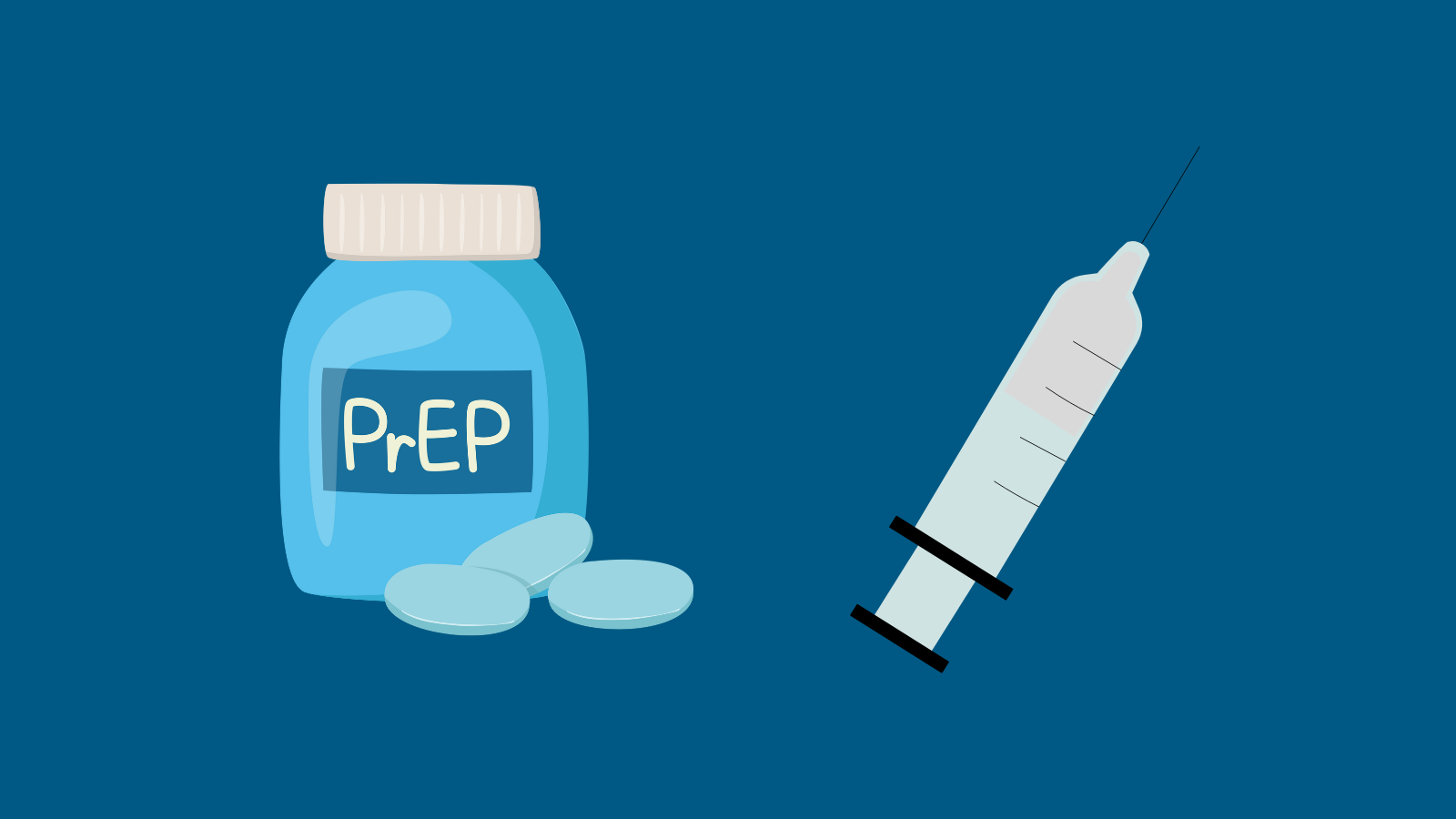
PrEP stands for pre-exposure prophylaxis. It is a way for people who do not have HIV to protect themselves from the virus. It involves taking a medication—either as a daily pill or as a shot—that is like the medication people living with HIV take.
Research has found that PrEP can be 99% effective in preventing sexually transmitted HIV if used correctly. (99% is impressive!) PrEP is about 74% effective in preventing HIV for people injecting drugs.
What does u=u mean for someone who has HIV?
The less virus that someone with HIV has in their blood, the less contagious they are. HIV treatment stops the virus from reproducing. For many people, treatment works so well that the virus is undetectable on blood tests. If the virus in undetectable, it cannot be transmitted to a partner. Sometimes people say U=U or undetectable=untransmittable. This is one of the reasons that treatment is so important; it keeps people healthy and prevents the spread of the virus.
What if think I was exposed to HIV already?
If you think you were exposed to HIV, you can talk to a health care provider about getting PEP—post-exposure prophylaxis. PEP involves taking medication to prevent the virus from reproducing in your body. PEP has to be started within 72 hours (3 days) of exposure, and you have to take the medication for 28 days.
PEP is often used when health care providers get stuck with a needle while taking care of a patient. It is also used when people have been sexually assaulted.
You can use PEP if you’ve had sex without a condom recently and worry that your partner may have HIV. You can also use PEP if you’ve used injection drugs recently and worry that you might have been exposed to HIV.
PEP is meant for emergencies. If you are (or worry you might be) exposed to HIV on a more regular basis, talk to a health care provider about getting PrEP (pre-exposure prophylaxis) instead.
How do I get PEP?
If you have a health care provider already, you can call them and see if they can write the prescription. Otherwise, you can go to an emergency room, an urgent care, or a sexual health clinic in your area. Most emergency departments are set up to help victims of sexual assault. A sexual assault nurse examiner will be able to help you get PEP.
What are the side effects of PEP?
PEP has some side effects including nausea, vomiting, diarrhea, dizziness, and tiredness. These can usually be managed with over-the-counter remedies. Stomach side effects can make it harder to take your medicine, but for PEP to work it is important not to miss doses.
Is there a vaccine for HIV?
No. Scientists have been trying to find a vaccine for HIV, but so far they have not had any luck. That said, PrEP can be up to 99% effective. There is now a PrEP option that is given as a shot twice a year. If you think about it, that’s almost like getting our flu or COVID boosters.
More on HIV