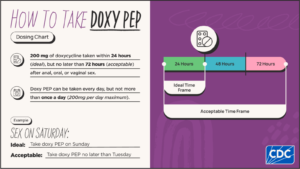
Fewer Women Are Getting Prenatal Care (and Missing an Important Chance to Prevent Congenital Syphilis)
A new report shows that fewer women are getting prenatal care. That means too many patients are missing the chance to prevent congenital syphilis.

A new study suggests a key to preventing recurrences of bacterial vaginosis (BV) in women might be to treat their male partners.
A healthy vagina has a balance between many types of bacteria, and the “helpful” bacteria keeps the “less helpful” bacteria in check. Sometimes the “less helpful” bacteria grow too fast, and this imbalance can result in a common condition known as bacterial vaginosis. Many people with BV don’t have symptoms but those who do might experience an unusual vaginal discharge or fishy odor, vaginal itching, or burning when they pee.
It isn’t clear exactly why BV develops or why it often comes back after treatment. Douching, having a copper IUD or even new sex partners have been mentioned as possibly associated. But research published in the New England Journal of Medicine offers more evidence that BV is strongly linked with sexual activity. (A note on douching: it isn’t clear if women develop BV because of douching or if they douche because they are already have BV and are trying to get relief from symptoms.)
The study was done with couples in which a woman was diagnosed with BV, had a male partner, and was in a relationship where she and her partner only had sex with each other. Eighty-one couples were assigned to a group where both partners were treated—the woman with oral antibiotics and the male with both oral antibiotics and an antibiotic cream applied to the skin of the penis. Eighty-three additional couples were in a group where only the woman was treated. (The current standard of care with BV only involves treating the partner who is diagnosed.)
In the group where both partners were treated, BV recurred in 35% of the women, compared to 63% in the group where only the woman received treatment. This difference was so striking that the study stopped early so all participants could take advantage of treatment.
Linking BV to sexual activity has been gaining traction, but does that mean it should be considered a sexually transmitted infection, or STI? Like relationships themselves, it’s complicated.
Patty Cason, RN, MS, FNP-BC, a board-certified family nurse practitioner specializing in reproductive and sexual health, suggests we think of BV as sexually “associated”: “It’s long been known the bacteria linked with BV are found on the penis, often below the foreskin, and that’s predictive of a partner’s risk of BV. These are naturally occurring bacteria, however, unlike the infections we classify as STIs. This exchange of bacteria that leads to BV can occur even in couples where both partners have only been sexual with each other.”
Ms. Cason says she’s excited about the new data because previously we lacked evidence that treating male partners changes the recurrence rate in women. She says treating partners is likely beneficial but adds, “There’s still much about BV we don’t know, and this includes why it occurs in the first place. In my practice, though, I’ve rarely seen a case in someone who has never had sex.” Ms. Cason says the aspect of BV and “sexual association” is complex and may go beyond a simple exchange of organisms: “The vagina is naturally acidic, semen less so, and the presence of semen can alter the vaginal pH in a way that makes the environment more welcoming for the bacteria that cause BV.”
Learn more about BV, including prevention, diagnosis, and current treatment options.

A new report shows that fewer women are getting prenatal care. That means too many patients are missing the chance to prevent congenital syphilis.

The condom. All sorts of shapes, sizes, colors (even glow-in-the-dark). Ribbed or plain. Lubed or not. Latex or plastic. ASHA’s Fred Wyand shares his thoughts on this reliable way to prevent STIs and pregnancy.

Syphilis rates among pregnant women went up 222% percent between 2016 and 2022 and another 28% between 2022 and 2024. This alarming increase shows too many pregnant women are not being screened.

Currently, condoms are the only widely available, proven method for preventing pregnancy and reducing transmission of HIV and other sexually transmitted infections (STIs) during sex. Condoms work.

At the end of 2025, the American Cancer Society released its new cervical cancer screening guidelines. In January 2026, the Health Resources and Services Administration endorsed a new set of guidelines as well. Both suggest HPV screening with self collected samples is an acceptable option.

Research suggests that only one dose of the HPV vaccine may be effective enough to prevent HPV-related disease, including cancer.

Australia has been a leader in HPV-prevention and cervical cancer screening for decades. Because of this, it is now close to eliminating cervical cancer entirely. However, recent drops in vaccination and screening rates threaten this progress.

The FDA approved two new drugs to treat gonorrhea The new drugs—gepotidacin and zoliflodacin—are both new kinds of antibiotics and represent the first completely new treatment options in over thirty years.
ASHA believes that all people have the right to the information and services that will help them to have optimum sexual health. We envision a time when stigma is no longer associated with sexual health and our nation is united in its belief that sexuality is a normal, healthy, and positive aspect of human life.
ABOUT
GET INVOLVED
ASHA WEBSITES
GET HELP
© 2026 American Sexual Health Association
We need to know if we can keep you company during this visit. We are useful for making this site work.
We use cookies to enhance your browsing experience. You can choose which cookies you want to accept.
Necessary cookies help make a website usable by enabling basic functions like page navigation and access to secure areas. The website cannot function properly without these cookies.
| Cookie | Provider | Purpose | Expiry |
|---|---|---|---|
digiconsent | This website | Stores your cookie consent preferences. | 1 year |
wordpress_logged_in_* | WordPress | Identifies logged-in users and their authentication details. | 14 days / Session |
wordpress_sec_* | WordPress | Stores authentication details for secure areas. | 14 days / Session |
wp-settings-* | WordPress | Stores user interface customization preferences. | 1 year |
wp-settings-time-* | WordPress | Stores the time when wp-settings cookie was set. | 1 year |
Analytics cookies help us understand how visitors interact with our website by collecting and reporting information anonymously. This helps us improve our website.
| Cookie | Provider | Purpose | Expiry |
|---|---|---|---|
_ga | Registers a unique ID to generate statistical data on website usage. | 2 years | |
_ga_* | Used by Google Analytics to store and count pageviews. | 2 years |
Marketing cookies are used to track visitors across websites. The intention is to display ads that are relevant and engaging for the individual user.
Functional cookies enable the website to provide enhanced functionality and personalization. They may be set by us or by third party providers.