Antibiotic-Resistant Gonorrhea is On the Rise Globally 

Historical poster on gonorrhea
A 1940 poster from the American Sexual Health Association touting antibiotics to cure gonorrhea.

A new report from the World Health Organization (WHO) warns of rising levels of drug-resistant gonorrhea. The data comes from reported cases of gonorrhea in 12 countries across five WHO regions.

Gonorrhea is one of the most common bacterial sexually transmitted infections (STIs) in the world with an estimated 82 million cases across the globe each year. In the United States, the Centers for Disease Control and Prevention (CDC) estimate 1.6 million cases of gonorrhea each year.

Many people who get gonorrhea won’t have any symptoms. Those who do may experience discharge from the penis or vagina and a burning sensation when they pee. Gonorrhea can also cause swollen testicles. If left untreated, gonorrhea can cause further health issues including infertility in both men and women.

No Longer Always Easy to Treat

Gonorrhea is caused by the bacterium, Neisseria gonorrhoeae, that continues to evolve to avoid antibiotics. This is referred to as developing antibiotic resistance. Over the last eighty years, gonorrhea has developed resistance to sulfanilamides, penicillins, tetracyclines, and fluoroquinolones. That leaves just one class of antibiotics—cephalosporins—as the only effective treatment we have left.

In the U.S. people with uncomplicated gonorrhea are given a single dose shot of ceftriaxone (which is a cephalosporin). Some are also given a dose of oral azithromycin. There have been cases in a number of countries in which this treatment alone was not enough. Those patients have all been cured of gonorrhea but have had to take a combination of antibiotics. The fear is that cases like these will begin to happen more often as gonorrhea becomes increasingly resistant to drugs we use to fight it.

The data from WHO’s Enhanced Gonococcal Antimicrobial Surveillance Program (ESGAP) report show that resistance to all available drugs rose in recent years. In 2022, only 0.8% of the Neisseria gonorrhoeae samples collected were resistant to ceftriaxone, by 2024 it was 5% of samples. Similarly, resistance to cefixime (another first-line cephalosporin) rose from 1.7% to 11% and resistance to azithromycin rose from 0.5% to 4%. Even more alarming, 95% of Neisseria gonorrhoeae isolates were found to be resistant to ciprofloxacin (often referred to as cipro).

New Treatments for Gonorrhea on the Horizon

There is good news, however, two new antibiotics— zoliflodacin and gepotidacin—were successful in clinical trials and may be available soon.

Of course, prevention and screening continue to be important. Gonorrhea is considered a “discharge disease” because it is spread through infected bodily fluids such as semen and cervical secretions. Condoms have been proven to provide excellent protection against discharge diseases.

Doxy PEP—the practice of taking doxycycline after sex to prevent bacterial STIs—can also provide some protection against gonorrhea. Doxy PEP is not as effective as it is against chlamydia and syphilis, likely because of the resistance the bacterium has developed, but it can reduce the risk of gonorrhea by 50%.

Screening and treatment are also an important part of preventing the spread of gonorrhea as well as the long-term health issues it can cause if left untreated. The Centers for Disease Control and Prevention (CDC) recommend yearly gonorrhea screening for:

  • all sexually active women under 25
  • women older who have risk factors such as new partners, multiple sex partners, or a sex partner who has an STI
  • men who have sex with men (MSM)

MSM who have multiple partners, anonymous partners, or partners who have an STI may want to be screened more often. Screening should be done at all possible sites of infection including the penis, throat, and anus.

Tracking antibiotic resistance in gonorrhea is also very important, but some areas lack the resources to do it. WHO officials called on countries around the world to invest in increased and improved surveillance so that we have the data we need to stay ahead of antibiotic resistance.


Learn More About Gonorrhea

Gonorrhea

Learn About Gonorrhea and How to Prevent It

Gonorrhea (also known as “the clap”) is an infection caused by the bacteria Neisseria gonorrhoeae. It is passed on during vaginal, anal, and oral sex (performing or receiving).
New drugs to treat gonorrhea

Good News! There Are Two New Drugs to Treat Gonorrhea 

The FDA approved two new drugs to treat gonorrhea. The new drugs—gepotidacin and zoliflodacin—are both new kinds of antibiotics and represent the first completely new treatment options in over thirty years.
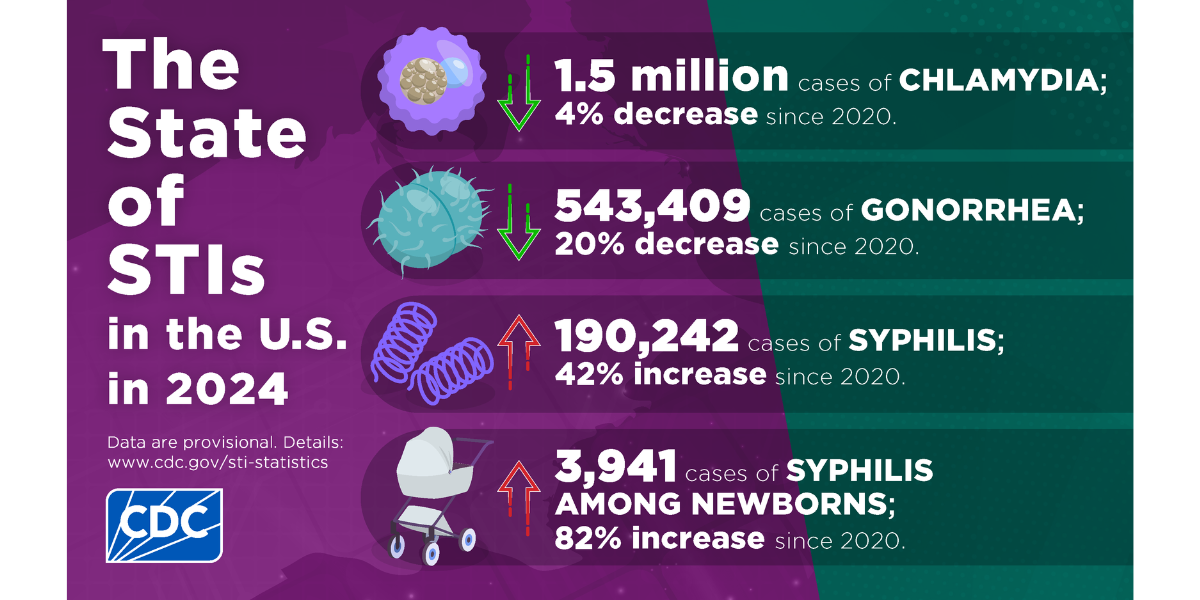
The State of STIs 2024

Latest Data Shows that Chlamydia, Gonorrhea, and Syphilis Rates are Dropping

The CDC just released STI Surveillance Data for 2024 that show cases of chlamydia, gonorrhea, and syphilis are slowly declining.
A person receives a vaccine

Could A Vaccine You Probably Already Have Protect Against Gonorrhea? 

There’s potential good news in gonorrhea prevention as a series of studies suggests that certain meningococcal B (MenB) vaccines can reduce the risk of gonorrhea.

Learn More About Doxy PEP from Three People Who Take It

Many people who take doxy PEP say it gives them peace of mind in their relationships and sex life. We sat down with Oscar Alexis, Efthimios, and Maxfield Haynes to talk about doxy PEP and get their perspective.
A prescription bag

Are Patients Not Following Through with STI Treatment?

About 1.6 million cases of chlamydia and 600,000 cases of gonorrhea are diagnosed in the United Sates each year. A new study suggests that these patients may not be following through with STI treatment or getting the right antibiotics.
Research on new antibiotic for gonorrhea

A Possible New Treatment for Gonorrhea is on the Horizon

A clinical trial of a new antibiotic found that it works just as well as a current drug regimen for treating gonorrhea infections. This is important because the bacteria that causes gonorrhea has become resistant to most existing antibiotics.
Swab test for chlamydia, gonorrhea, and trich

FDA Approves a New At-Home Test for Three Common STIs

The FDA just approved a new, fully at-home test for chlamydia, gonorrhea, and trichomoniasis. The tests, which is only for women, will be available without a prescription. Users can collect their own sample and have results in less than 30 minutes.
Many hands are placed on a pregnant person's belly

The Impact of STIs on Fertility

Infertility can stem from factors affecting both men and women. Sometimes, these are related to sexually transmitted infections (STIs). Learn more out the impact of STIs on fertility.
A man speaks with a health care provider

Two Studies Show Doxy PEP is a Winning Strategy

Two studies published in this month’s JAMA Internal Medicine offer encouraging findings about the use of Doxy PEP.
Swabs and vials for an at-home test

A Truly At-Home Test for Bacterial STIs Does Well in Trials

A completely at-home PCR test for chlamydia, gonorrhea, and trichomaniasis could allow people to test themselves and get results and treatment within a matter of hours.
A man handed a prescription for Doxy-PEP

Doxy PEP Can to Help Prevent STIs

Read through FAQa on doxy PEP is the strategy of taking the antibiotic doxycycline after condomless oral or anal sex to prevent chlamydia, gonorrhea, or syphilis.
Doxy-PEP works

New Studies Add to Evidence that Doxy PEP Works for STI Prevention

New studies add to our evidence that doxy PEP works to prevent bacterial STIs among transgender women and men who have sex with men.
PID is Pelvic inflammatory disease

PID is a leading cause of infertility in women

Pelvic inflammatory disease (PID) is a serious infection in the reproductive organs of women that can lead to infertility or life-threatening complications.
Alarming Rise in Syphilis rates

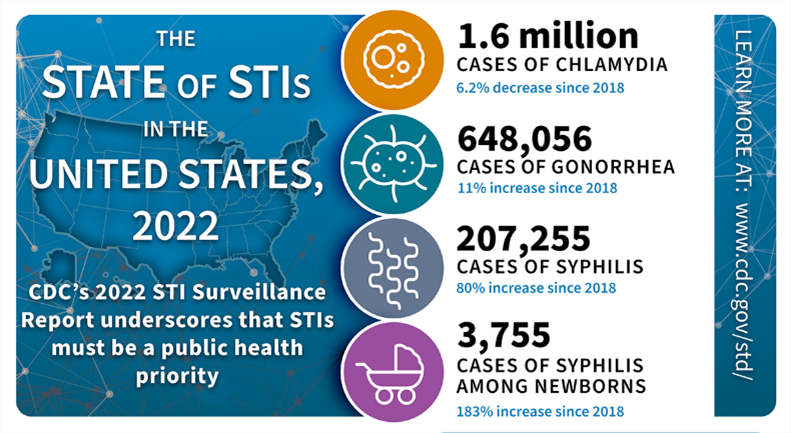
The State of STIs — CDC Reports an Startling Rise in Syphilis

CDC released new surveillance data on sexually transmitted infections. There were 2.5 million cases of chlamydia, gonorrhea, and syphilis reported in the United States in 2022. Most alarming was a rise in syphilis rates, up 80% since 2018.
New drugs to treat gonorrhea

New Antibiotic Shows Promise in Treating Resistant Gonorrhea

A new antibiotic could give health care providers a much-needed new tool in the fight against antibiotic resistant strains of gonorrhea.