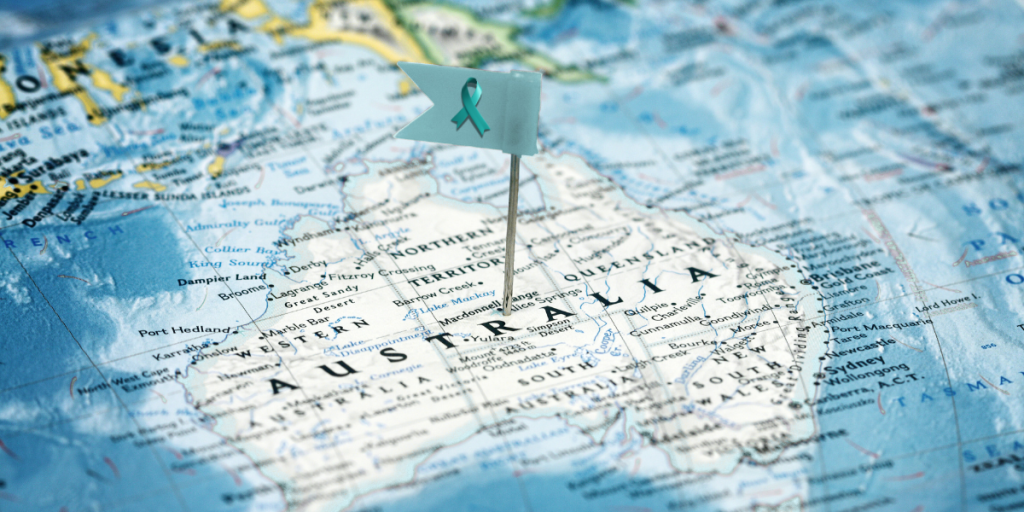
A new report from the NHMRC Centre of Research Excellence in Cervical Cancer Control shows the progress Australia has made in preventing cervical cancer. The country has been a leader in HPV-prevention and cervical cancer screening for decades. Because of this, Australia is now close to eliminating cervical cancer altogether. However, recent drops in vaccination and screening rates threaten this progress.
Decades of Progress
In 1991, Australia launched the National Cervical Cancer Screening Program. The program encouraged women to get regular Pap test. The test (also called cytology) can find early cell changes which can be treated before they turn into cancer. The program cut cervical cancer cases and deaths by about 50%.
In 2007, the country launched the world’s first HPV vaccination program. As a result, HPV infection rates have plummeted as have the number of cervical pre-cancers.
In 2017, the country updated its screening program. Instead of Pap tests, it began using HPV tests. These tests look for HPV types 16 and 18, which cause most cervical cancers. People who test positive can be followed more closely by health care providers. This change is expected to reduce cervical cancer rates by another 20–30%.
In 2018, Australia introduced a newer HPV vaccine. This vaccine protects against nine types of HPV that can cause cancer. Earlier versions of the vaccine protected against only four types. (Types 16 and 18 were covered in both versions of the vaccine.)
The Plan to End Cervical Cancer
With these tools in place, experts believed cervical cancer could be eliminated. In 2023, Australia launched a national elimination strategy.
The plan set five-year goals, including: vaccinating 90% of girls and boys, screening 70% of women aged 25–75 every five years, and treating 95% of detected pre-cancers and cancers.
The new report shows that Australia is getting closer to reaching these goals. It highlights several encouraging findings:
- Cervical cancer rates are slowly declining. In 2020, there were 6.6 cases per 100,000 women. In 2021, this dropped to 6.3 cases. Experts expect the trend to continue.
- In 2021, no cases of cervical cancer were diagnosed in women under 25. This age group was likely the first to be vaccinated before becoming sexually active. Researchers say this result is almost certainly due to HPV vaccination.
- There are fewer HPV infections, especially in younger women. Only 1% of women aged 25–29 tested positive for HPV types 16 or 18. Again, this is a direct result of widespread vaccination.
- Most women have been screened at least once. About 85% of women aged 35–39 have had an HPV test. Being screened at least once substantially reduces an individual’s cervical cancer risk.
Screening and Vaccination Rates Dropping
Unfortunately, the rates of both vaccination and screening have been dropping in Australia since the pandemic. In 2020, 85.7% of young people in the country had gotten the HPV vaccine, by 2024 this had dropped to 79.5%.
Julia Brotherton, Professor of Cancer Prevention Policy at the University of Melbourne and one of the reports co-authors, noted that the vaccine is safe and effective. She said, “Parents should think of this as a gift they can give their child to protect them for their lifetime. And I urge all young people who missed out at school, for whatever reason, to talk to their GP, nurse or pharmacist about accessing their free catchup dose.”
The number of people who are up to date on their screening has also dropped in the last two years. Today, more than 1 in 4 women are overdue for cervical cancer screening.
Megan Smith, co-author and Associate Professor at University of Sydney’s Cancer Elimination Collaboration explained, “We are seeing some improvements, including in the 35- to 39-year-old age group, even in very remote areas. But with 15 percent of that age group having never had a screening test in their lifetime, and only 50 percent of 25- to 29-year-olds being up to date with screening, we need to promote tailored strategies such as HPV self-collection.”
Issues of Inequality
The report also shows that not everyone benefits equally from prevention efforts. Indigenous people and those living in remote areas face higher rates of cervical cancer and death from the disease.
In fact, Indigenous people have nearly double the cervical cancer rate of the national average. Their death rate from cervical cancer is also much higher.
Dorothy Machalek, an epidemiologist at the Kirby institute and another co-author, said, “Our national elimination strategy is centered on achieving cervical cancer elimination for all. But our report continues to show that some groups are at high risk of being left behind unless we act now. We need to focus our efforts on collecting better and more timely data so we can better develop effective solutions.”
The Road Ahead
The report recommends several steps to ensure continued progress. These include revitalizing school vaccination programs, improving access for Aboriginal and Torres Strait Islander adolescents, piloting new ways to offer screening, and enhancing national health data systems.
Cervical cancer is a preventable disease. Australia’s success shows that decades of sustained investment and consistent messaging can have a positive impact on women’s health. Elimination is within reach there. But the declines in both vaccination and screening are concerning and reflect trends seen in other countries, including the United States.
If we want to see continued success in our fight against cervical cancer, public health experts around the world must continue to emphasize the importance of vaccination and screening efforts.