

Five Things You Should Know about Herpes
ASHA answers many questions from the public about STIs, including about genital herpes. Here we offer five things to know about how to manage this common infection.
Herpes:
Fast Facts
More than 50 percent of the adult population in the United States has oral herpes (commonly called cold sores or fever blisters). Most people contract oral herpes when they are children by receiving a kiss from a friend or relative.
According to the Centers for Disease Control and Prevention (CDC), about 12% (one in eight) persons ages 14-49 in the United States has genital HSV-2 infection; however, as many as 90 percent are unaware that they have the virus. There are many reasons people do not know they have herpes (see the section on signs and symptoms for more).
Herpes is passed on through direct skin-to-skin contact. This happens when a contagious area comes into contact with a tiny break in the skin or mucous membrane tissue, usually on the mouth or genitals. Most skin on the body is too thick for the virus to go through.
Genital herpes can be transmitted sexually both when symptoms are present and sometimes when symptoms are not present. There are several days throughout the year (called asymptomatic reactivation, asymptomatic shedding, or subclinical shedding) when the virus may be on the surface of the skin, but there are no symptoms. Herpes can be passed through sexual contact during this time.
There are no documented cases of a person getting genital herpes from an inanimate object such as a toilet seat, bathtub, or towel. Herpes is a very fragile virus and does not live long on surfaces.
One thing that makes viruses in the herpesvirus family different from other viruses is something called latency. Herpes simplex and other herpesviruses have a way of creating a small but permanent colony of viral particles inside the body. This colony is often completely inactive (or “asleep”) but it stays for a lifetime.
Here’s how it works: once HSV gains a foothold, the virus begins making copies of itself and spreading. This can lead to a range of signs and symptoms, everything from subtle symptoms that go unrecognized to severe illness. In response, the immune system mobilizes its forces for an assault and limits HSV’s spread.
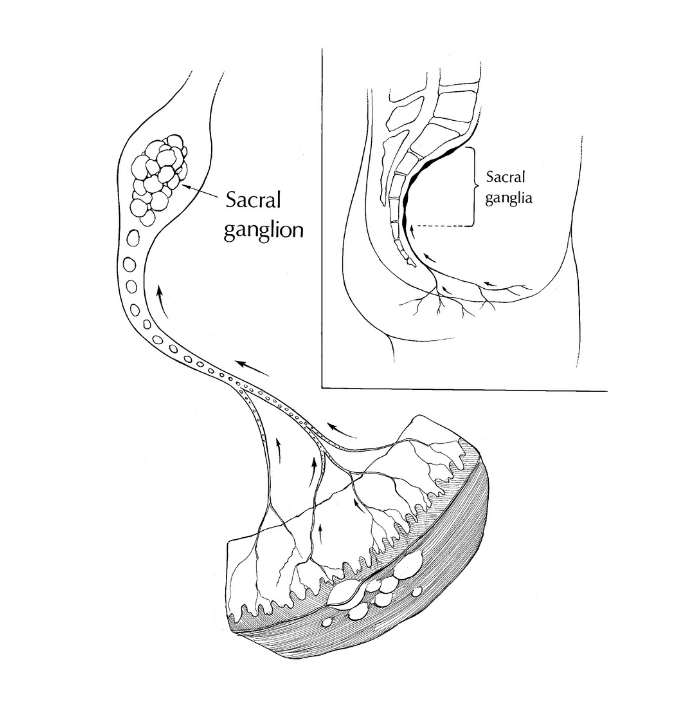
Whether there are severe symptoms or not, the virus will stay in the body. To avoid the immune system, HSV will retreat along the nerve pathways, hiding in a nerve root called a “ganglion.” In cases of genital herpes, HSV retreats to the sacral ganglion, located at the base of the spine. In oral or facial herpes (cold sores), HSV finds its way to the trigeminal ganglion, at the top of the spine. In the ganglion, the virus remains inactive (“latent”) for an indefinite period of time.
The phenomenon of latency is similar to a sleep cycle. Basically, the virus returns to a safe haven and sleeps, sometimes for long periods. Unfortunately, while HSV is latent, various biological events can cause it to become active and begin traveling the nerve pathways back to the skin. There it can cause signs and symptoms again, though it doesn’t always do this.
How often the virus “wakes up” is a complicated question. It used to be thought that all of the HSV’s “waking times” were marked by outbreaks—an irregularity in the skin (defined as a “lesion”) such as a pimple, for example, or else some kind of symptom like an itch. Then researchers learned that the virus could wake and become active without causing noticeable signs or symptoms: no itch, no pain, no pimples, no blisters. This phenomenon has been called a number of things, including “asymptomatic shedding,” “asymptomatic reactivation,” and “subclinical shedding.”
Asymptomatic shedding applies to the following situations:
The point is that when herpes “wakes up” and travels to the surface of the skin or mucous membranes, it is often subtle and hard to recognize, even for a health care provider, and sometimes impossible to spot. Also, even if you’re a person with recurring signs and symptoms that you can usually recognize as herpes, there are almost certainly days when you won’t be aware that the virus has reactivated and traveled to the skin or mucous membranes.
While some people realize that they have genital herpes, many do not. It is estimated that one in eight persons in the United States has genital herpes, but as many as 90 percent are unaware that they have the virus. This is because many people have very mild symptoms that go unrecognized or are mistaken for another condition or no symptoms at all.
Because signs can vary a great deal, we recommend that an individual see a health care provider to be tested if they have a lesion of any kind. This can be swabbed for a culture test or for other sensitive tests.
A person may show symptoms within days after contracting genital herpes, or it may take weeks, months, or years. For this reason, it can be difficult for people to know when and from whom they may have contracted the virus.
The “classic” symptoms that most people associate with genital herpes are sores, vesicles, or ulcers – all of which can also be called “lesions.” These classic lesions of genital herpes often resemble small pimples or blisters that eventually crust over and finally scab like a small cut.
These lesions may take anywhere from two to four weeks to heal fully. During this time, some people will experience a second crop of lesions, and some will experience flu-like symptoms, including fever and swollen glands, particularly in the lymph nodes near the groin. Headache and painful urination also sometimes accompany full-blown symptoms of first episodes.
But for many other people, herpes lesions can so mild that they may be mistaken for insect bites, a yeast infection, “jock itch,” and other conditions. In other words, the signs go unrecognized as being caused by genital herpes. Also, signs and symptoms can be found: on the penis and vulva; near the anus; on the thigh; on the buttocks—virtually anywhere in the genital area.
But what if you don’t see any lesions nor have other symptoms? In some studies, people with herpes were completely unaware of lesions about one third of the time that the virus was found to be active in the genital area. While recognizing lesions and other symptoms is important, this cannot always tell you when the virus is active.
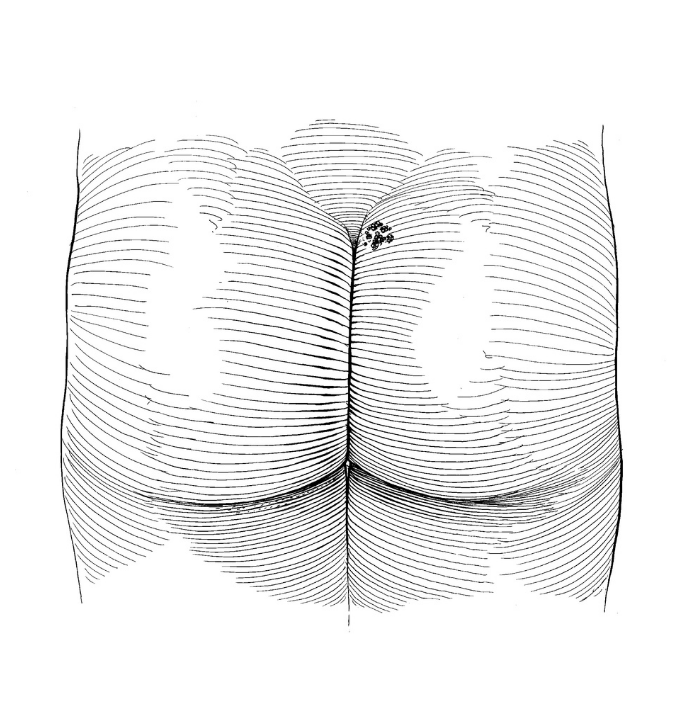
The amount of outbreaks someone has varies from person to person. The average number of outbreaks for a person with genital HSV-2 is four to five per year. The average for genital HSV-1 is less than one outbreak per year. Usually, there are more outbreaks during the first year, and many people find that outbreaks tend to lessen in severity and frequency with time.
Early in the phase of reactivation many people experience an itching, tingling, or painful feeling in the area where their recurrent lesions will develop. This sort of warning symptom—called a “prodrome”— often precedes lesions by a day or two. To be on the safe side, it’s best to assume virus is active (and, therefore, can be spread through direct skin-to-skin contact) during these times.
Learn more about signs and symptoms, the first episode, and recurrences.
There are different tests available for herpes. Some tests can be done if you are experiencing symptoms. Blood tests are available for people who may not have had symptoms or if the signs have already healed. Not all tests are accurate, however, and many health care providers are unclear on which tests to perform. To find out more about getting an accurate diagnosis, visit our section on testing.
Any sexually active person can get genital herpes. Aside from abstaining from sex or mutual monogamy with one uninfected partner, there are ways to reduce the chance of getting or passing on herpes. Since one in eight persons is thought to have herpes and most people don’t know they have it, if a partner has ever been sexually active, it is possible that she or he could unknowingly have the virus too.
If one or both partners have herpes, it is important to become educated about herpes, to understand the basics of herpes prevention, and to make decisions together about which precautions are right for you.
Currently, there is no treatment to cure herpes; however, there are medications to treat symptoms and control outbreaks.
Three antiviral medications (in pill form) are approved by the Food and Drug Administration (FDA) for the treatment of herpes: acyclovir, famciclovir, and valacyclovir. All of these medications, which are taken orally, work by attacking the herpes virus and disrupting its ability to multiply. Each of these medications can be used during a recurrence (outbreak) to help speed the healing process of an outbreak.
All three drugs are FDA-approved for daily, suppressive therapy to help reduce the frequency of outbreaks. Acyclovir is also available in the form of an ointment, but the medication has been proven to be much more effective for genital herpes when taken orally as a pill. Valacyclovir, when taken daily (suppressive therapy) by a person with recurrent genital herpes, can reduce the risk of transmission to a partner.
Using medication to treat genital herpes is not required. However, if a person would like to use antivirals, speaking with a health care provider can help determine which treatment may be right for them.
For more information on treatment and alternative therapies, see the treatment page.
While neonatal herpes is a serious condition, it is also very rare. Less than 0.1% of babies born in the United States each year get neonatal herpes. By contrast, some 20-25% of pregnant women have genital herpes. This means that most women with genital herpes give birth to healthy babies.
A mother helps the baby by passing her antibodies to the infant during pregnancy, so women who acquire genital herpes before becoming pregnant have a low risk of passing the virus to their baby.
A woman who contracts genital herpes during the third trimester of pregnancy is at a higher risk of passing herpes to the baby because she has not had time to build up antibodies to the virus.
Most mothers with genital herpes have normal vaginal deliveries. Learn more about herpes and pregnancy.
ASHA answers many questions from the public about STIs, including about genital herpes. Here we offer five things to know about how to manage this common infection.
A paper published ahead of print in Sexually Transmitted Diseases finds that commercial blood tests commonly used to diagnose herpes simplex virus (HSV) are frequently not reliable, especially in those with “low positive” results.

The best way for couples to deal with herpes is to talk about it openly and make decisions together. So what’s the best way to start the conversation?

If you are pregnant and you have genital herpes, you may be concerned about the risk of spreading the infection to your baby. Be reassured that the risk is extremely small.
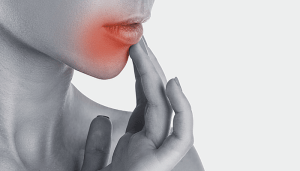
About 50 percent of the adult population in the United States has oral herpes. Most people contract oral herpes when they are children by receiving a kiss from a friend or relative.

While there is no cure for herpes simplex virus (HSV) infections, there are various treatment options available that can help manage symptoms and control outbreaks.

Is that sore or rash actually genital herpes? Can you tell by just looking? Can a healthcare provider? No! When it comes to diagnosing genital herpes, it takes more than a look.
Most people with herpes won’t experience symptoms, but knowing what to look for can make you more aware.

We need to know if we can keep you company during this visit. We are useful for making this site work.
We use cookies to enhance your browsing experience. You can choose which cookies you want to accept.
Necessary cookies help make a website usable by enabling basic functions like page navigation and access to secure areas. The website cannot function properly without these cookies.
| Cookie | Provider | Purpose | Expiry |
|---|---|---|---|
digiconsent | This website | Stores your cookie consent preferences. | 1 year |
wordpress_logged_in_* | WordPress | Identifies logged-in users and their authentication details. | 14 days / Session |
wordpress_sec_* | WordPress | Stores authentication details for secure areas. | 14 days / Session |
wp-settings-* | WordPress | Stores user interface customization preferences. | 1 year |
wp-settings-time-* | WordPress | Stores the time when wp-settings cookie was set. | 1 year |
Analytics cookies help us understand how visitors interact with our website by collecting and reporting information anonymously. This helps us improve our website.
| Cookie | Provider | Purpose | Expiry |
|---|---|---|---|
_ga | Registers a unique ID to generate statistical data on website usage. | 2 years | |
_ga_* | Used by Google Analytics to store and count pageviews. | 2 years |
Marketing cookies are used to track visitors across websites. The intention is to display ads that are relevant and engaging for the individual user.
Functional cookies enable the website to provide enhanced functionality and personalization. They may be set by us or by third party providers.