Molluscum Contagiosum

A sample is viewed under a microscope

Molluscum contagiosum is a skin disease caused by the molluscum contagiosum virus (MCV). It usually causes one or more small lesions/bumps. Molluscum is generally a harmless infection and symptoms may resolve on their own. While once a disease primarily of children, molluscum has evolved to become a sexually transmitted infection in adults.

How is molluscum transmitted?

Molluscum contagiosum virus (MCV) may be sexually transmitted by skin-to-skin contact (does not have to be mucous membranes) and/or lesions. Transmission through sexual contact is the most common form of transmission for adults.

MCV may be passed on from inanimate objects, like towels or clothing that come in contact with the lesions. MCV transmission has been associated with swimming pools and sharing baths with an infected person.

MCV also may be transmitted by autoinoculation, such as touching a lesion and then touching another part of the body. To stop from further spreading the infection, do not shave over or close to areas that are visibly infected.

How long until a person shows symptoms?

The time between when a person is infected and when they begin to show symptoms is called the incubation period. For molluscum, the incubation period averages two to three months, but it may range from one week to six months. So someone may see symptoms in as little as a week, others may take as long as six months. On average, it takes two to three months.

What are the symptoms of molluscum?

  • Molluscum can cause small, painless lesions. These lesions are raised bumps that have a dimple in the center. They may begin as small bumps which can develop over a period of several weeks into larger sores/bumps. The lesions can be flesh colored, gray-white, yellow or pink. They can cause itching or tenderness in the area, but in most cases the lesions cause few problems.
  • Lesions are usually present on the thighs, buttocks, groin and lower abdomen of adults, and may occasionally appear on the external genital and anal region.
  • Lesions can last from 2 weeks to 4 years—the average is 2 years.
  • People with compromised immune systems may develop extensive outbreaks.

How is it diagnosed?

Diagnosis is usually made by the characteristic appearance of the lesion, so a provider can often tell by just looking. A provider can also take a specimen from the lesion and view it under a microscope to confirm.

Is molluscum treatable?

  • Most symptoms eventually resolve on their own, so treatment may not be necessary. But lesions can also be removed. This helps reduce the risk of further spreading the lesions on your own body of passing on MCV to others.
  • Lesions can be removed surgically and/or treated with a topical treatment such as podophyllin, cantharidin, phenol, or iodine.
  • Cryotherapy (freezing the lesion with liquid nitrogen) is an alternative method of removal.
  • Lesions may come back, but it is not clear whether this is due to reinfection or reactivation of a dormant infection.

What does it mean for my health?

The most common complication from molluscum is a secondary infection caused by bacteria. This can be more of a problem for people with compromised immune systems.

How can I prevent molluscum?

Because transmission through sexual contact is the most common form of transmission for adults, preventing skin-to-skin contact with an infected partner will be most effective in preventing MCV.

Condoms or other barriers for vaginal, oral, and anal sex may help to prevent such contact. Using spermicides is not recommended as they can irritate the skin or vaginal tissue and, especially for women, cause abrasions (tiny openings in skin) that may make it easier to contract sexually transmitted infections.

If you do get molluscum contagiosum, avoid touching the lesion and then touching another part of the body without washing your hands to prevent any chance of spreading the infection.

Learn More About Herpes

A young woman and a doctor talking

Getting the Sexual Health Care You Need

It can be intimidating to talk to a health care provider about your sexual health. But being able to discuss your physical health as it relates to your sexual health is absolutely crucial.
Man sitting on an exam table

Sexual Health Care

Taking care of your sexual health means knowing your body, understanding how it works, and being able to recognize when something isn't quite right. It also means preventive care that can help you find problems early and prevent serious illness.
Trichomoniasis

Trichomoniasis (a.k.a. “Trich)

With roughly two million cases in the U.S., trichomoniasis (“trich”) is the most common STI you’ve never heard of. Learn more about this common STI in our four-part expert series.
STIs from oral sex

Oral Sex and STIs

Can you get an STI from oral sex? Yes. Many STIs, including chlamydia, gonorrhea, and syphilis, can be spread through oral sex.
Mpox

Understanding Mpox and Your Sexual Health

Mpox is an infection caused by a virus. The mpox virus can be spread through close skin-to-skin contact with a person who is infected. Given that, mpox can be passed on by intimate sexual contact.
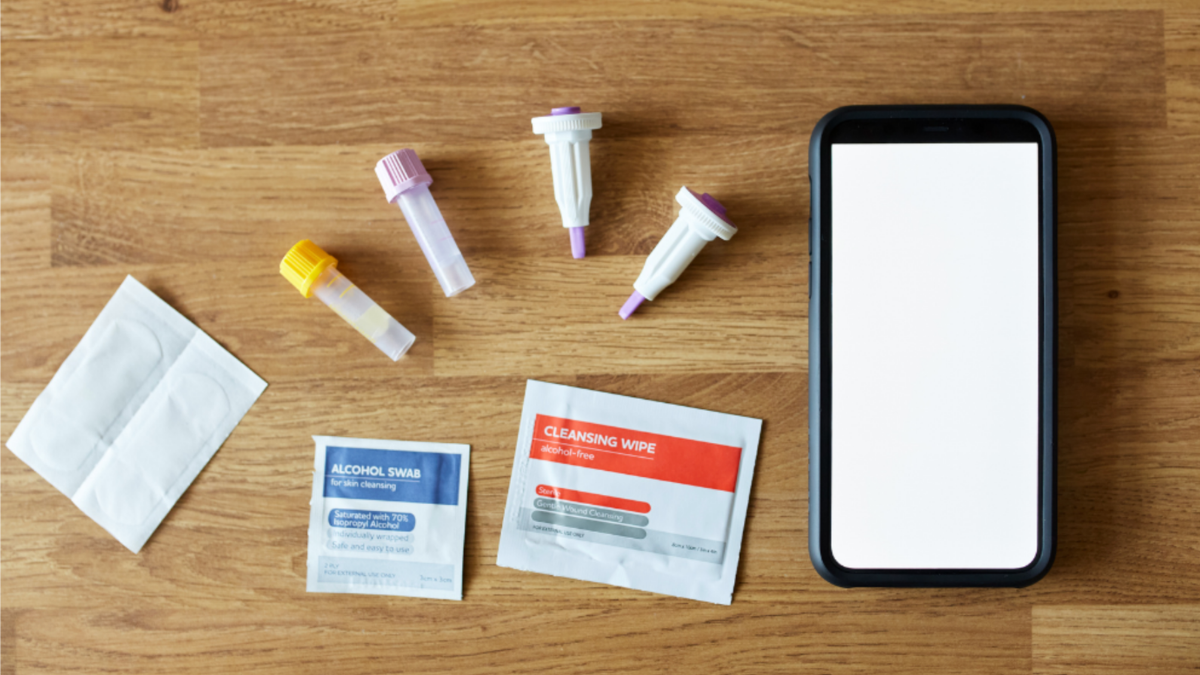
Components of a home test kit

Testing for STIs at home? Yes, it’s possible—and popular

Learn how home testing works and what free at-home tests are available in your area.
Hepatitis C

Cure Rates for Hepatitis C “Jarringly Low”

According to new data from the Centers for Disease Control and Prevention (CDC), only one in three adults in the U.S. infected with hepatitis C have been cured despite the introduction of direct-acting antivirals almost 10 years ago.
Pregnant person examined by health care provider

Shortage of Only Drug Approved to Treat Syphilis in Pregnant People

Treating syphilis during pregnancy can help both mother and child, but there is a shortage of Bicillin-L-A, the only antibiotic approved for this population.
Syphilis

Syphilis Rates Surging in Newborns

Cases of infants born with syphilis have soared in recent years. New CDC data reveal that more than 3,700 babies were born with syphilis in 2022—more than 10 times the number born in 2012.
New drugs to treat gonorrhea

New Antibiotic Shows Promise in Treating Resistant Gonorrhea

A new antibiotic could give health care providers a much-needed new tool in the fight against antibiotic resistant strains of gonorrhea.
Words matter

Words Matter: Minimizing STI Stigma in Healthcare Settings

Talking about STIs is still considered taboo and conversations about sexual behavior are often uncomfortable—even in a healthcare setting. Learn ways to communicate without assumptions or judgment.
Package in a mailbox

A Step Forward for STI Testing: FDA Approves an At-Home Testing Option

For the first time, the Food and Drug Administration has given market authorization to an at-home test for chlamydia and gonorrhea.
Alarming Rise in Syphilis rates

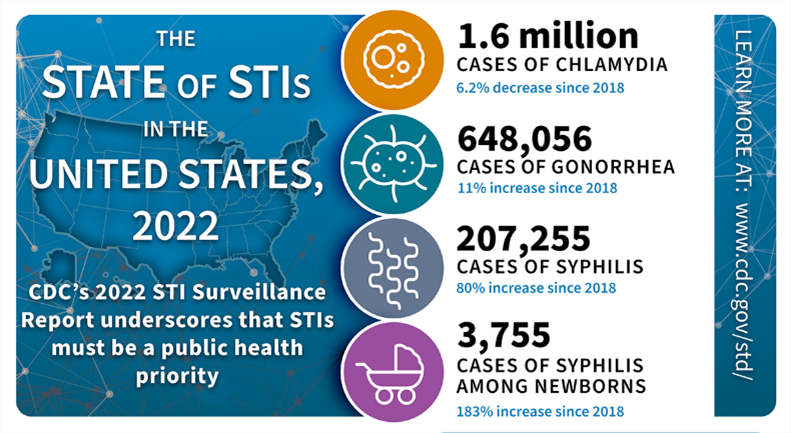
The State of STIs — CDC Reports an Startling Rise in Syphilis

CDC released new surveillance data on sexually transmitted infections. There were 2.5 million cases of chlamydia, gonorrhea, and syphilis reported in the United States in 2022. Most alarming was a rise in syphilis rates, up 80% since 2018.
Syphilis can be cured

Understanding Syphilis and How to Prevent It

Syphilis can be treated more easily if it is caught early. But undiagnosed and untreated syphilis can be dangerous. It can cause irreversible health damage and even death.
NGU

NGU, or Nongonoccocal Urethritis

Nongonococcal urethritis—or NGU—is an infection of the urethra caused by germs other than gonorrhea. The most common cause is chlamydia.
Young man getting vaccine

Vaccines That Can Prevent STIs

One important prevention tool against sexually transmitted infections is vaccination. Currently, vaccines are available to protect against infection with HPV, hepatitis A and hepatitis B.
An older couple kissing

STIs Are Not Just for the Young

STIs aren’t about age, they’re about sexual behavior. Older people are having sex, and they need to be thinking about sexually transmitted infections.
A couple kissing

Can I Get an STI from Kissing?

You can get STIs from kissing, but most experts would tell you that kissing—even passionate kissing with tongue—is a pretty safe sexual behavior.
A woman is confused

Survey Says: Americans Have Misconceptions About STIs   

How are STIs transmitted? When should someone be tested? A national survey from the Ohio State University Wexner Medical Center finds many in the U.S. struggle when answering those questions.
A male patient talks to a health care provider

Should heterosexual men get tested for STIs?

Widespread screening for STIs in heterosexual men is deemed “not cost effective.” Should we reconsider?