
STIs in Older Adults are Rising—Up to Seven Times Higher Than 2012
STIs in older adults have increased dramatically over the past several decades, and we’re still not talking about it.

The hepatitis B vaccine has been in the news recently with some people questioning why we vaccinate newborns for a sexually transmitted infection (STI) and others suggesting that we should postpone this vaccine until adolescence. Hepatitis B—sometimes called hep B—is a viral infection of the liver. While it is an STI, it can be transmitted in many other ways and can be very dangerous, especially for babies and young children.
Experts say that vaccinating newborns against hepatitis B is one of the most important things we do to protect infants.
Hepatitis B virus is passed through contact with infected body fluids such as blood, semen, and vaginal secretions. It can be transmitted through oral, anal, and vaginal sex. It can also be transmitted during injection drug use if people share needles or other equipment.
Most babies who get hepatitis B get it from their mothers during birth. It is recommended that pregnant women get tested for hepatitis B before they give birth, but some women don’t have access to the prenatal care they need and may never not be screened during pregnancy.
The virus is transmitted in other ways as well. Hepatitis B is considered highly contagious because the virus can live outside the body—on surfaces in our homes, schools, and public places—for up to seven days. It is still infectious during that time.
This means that the virus can be transmitted from a family member to a child at home through items like toothbrushes, razors, and nail clippers. It also means that children can transmit the virus to each other through biting (which is common in day care settings), playground accidents, or contact with blood during sports. The blood does not have to be visible to be infectious.
Vaccinating all newborns for hepatitis B within 24 hours of birth protects them from contracting the virus during delivery and as they grow.
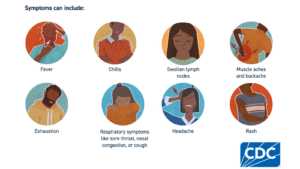
Initial or acute infection with hepatitis B may be mild and have few, if any, symptoms. Many people who get an acute infection clear the virus on their own without treatment. Once a person has cleared the virus, they can’t be infected with hepatitis B again.
Other people who contract hepatitis B don’t clear it and develop a chronic infection, which can last for their entire lives. Over the course of a lifetime chronic infection can lead to liver damage, liver failure, liver cancer, or even death.
Hepatitis B is especially dangerous for babies and young children. Babies who are infected with hepatitis B at birth or during the first year of their lives have a 90% chance of developing a chronic infection. Young children who are infected between ages one and five have about a 30% percent chance of developing a chronic infection. One quarter (25%) of babies and young children who develop a chronic infection will die from the disease.
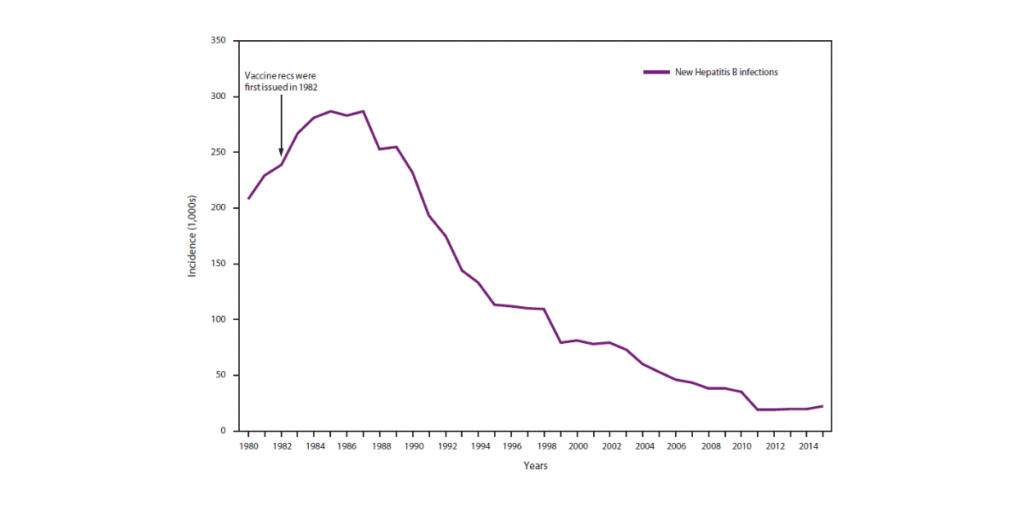
Since 1982, over a billion doses of hepatitis B vaccines have been given to people worldwide, and it has proven to be safe. The most common side effects are mild and include headaches, fever, or soreness at the injection site.
The vaccine also works. It protects 98% of healthy babies who are get it. This protection can last for 20 years or even their whole lives. The CDC began recommending vaccinating all newborns in 1991. Between 1990 and 2019, acute infections among children and teens dropped by 99%.
The bottom line is that vaccinating infants for hepatitis B is a very important part of keeping them safe and healthy and can prevent them from experiencing life-long—and potentially life-threatening—liver issues.

STIs in older adults have increased dramatically over the past several decades, and we’re still not talking about it.

So you’re thinking of taking PrEP and need to figure out how to pay for it. The answer will depend on whether or not you have health insurance (and there are options if you don’t).

For the first time ever, there were no deaths from cervical cancer among young women ages 20-24 in England over a five-year period. This is great news and adds to evidence that widespread HPV vaccination saves lives.

Herpes may raise strong emotional issues, especially in the first few weeks or months after a diagnosis. Some people initially feel embarrassment, shame, anger, or depression. The good news is that these emotions tend to fade away over time. Some studies have shown that even

Listen as cervical cancer survivors discuss diagnosis, treatment, and survivorship, and offer advice on coping with cervical cancer.

ASHA answers many questions from the public about STIs, including about genital herpes. Here we offer five things to know about how to manage this common infection.

Sex can be part of life well into our later years. While we may face health challenges as we age, we can still continue to enjoy a satisfying sex life.

ASHA was founded in 1914. This timeline traces our history over our first 100 years.
ASHA believes that all people have the right to the information and services that will help them to have optimum sexual health. We envision a time when stigma is no longer associated with sexual health and our nation is united in its belief that sexuality is a normal, healthy, and positive aspect of human life.
ABOUT
GET INVOLVED
ASHA WEBSITES
GET HELP
© 2026 American Sexual Health Association
We need to know if we can keep you company during this visit. We are useful for making this site work.
We use cookies to enhance your browsing experience. You can choose which cookies you want to accept.
Necessary cookies help make a website usable by enabling basic functions like page navigation and access to secure areas. The website cannot function properly without these cookies.
| Cookie | Provider | Purpose | Expiry |
|---|---|---|---|
digiconsent | This website | Stores your cookie consent preferences. | 1 year |
wordpress_logged_in_* | WordPress | Identifies logged-in users and their authentication details. | 14 days / Session |
wordpress_sec_* | WordPress | Stores authentication details for secure areas. | 14 days / Session |
wp-settings-* | WordPress | Stores user interface customization preferences. | 1 year |
wp-settings-time-* | WordPress | Stores the time when wp-settings cookie was set. | 1 year |
Analytics cookies help us understand how visitors interact with our website by collecting and reporting information anonymously. This helps us improve our website.
| Cookie | Provider | Purpose | Expiry |
|---|---|---|---|
_ga | Registers a unique ID to generate statistical data on website usage. | 2 years | |
_ga_* | Used by Google Analytics to store and count pageviews. | 2 years |
Marketing cookies are used to track visitors across websites. The intention is to display ads that are relevant and engaging for the individual user.
Functional cookies enable the website to provide enhanced functionality and personalization. They may be set by us or by third party providers.