Good News! There Are Two New Drugs to Treat Gonorrhea 

New drugs to treat gonorrhea

In late 2025, the US Food and Drug Administration (FDA) approved two new drugs to treat gonorrhea. This news came just weeks after the World Health Organization (WHO) warned about antibiotic resistant gonorrhea infections. The two new drugs, gepotidacin and zoliflodacin, are new kinds of antibiotics and mark the first completely new treatment options in over 30 years.

Gonorrhea is one of the most common bacterial sexually transmitted infections (STIs) in the world, with an estimated 82 million cases across the globe each year. In the United States, the Centers for Disease Control and Prevention (CDC) estimate 1.6 million cases of gonorrhea each year.

Many people who get gonorrhea won’t have any symptoms. This is one of the reasons gonorrhea is so common; people pass it without ever knowing they had it. Without treatment, gonorrhea can cause health issues including infertility in both men and women.

Gonorrhea Has Become Resistant to Treatment

Gonorrhea is still considered a curable STI, but treating it is more challenging than it used to be. The bacteria that cause it have become resistant to most antibiotics, including sulfanilamides, penicillins, tetracyclines, and fluoroquinolones.

In fact, before the new drugs were approved, there was only one existing class of antibiotics–cephalosporins–that remained effective. The current standard treatment is an injection of ceftriaxone (which is a cephalosporin), but there have been cases of gonorrhea that are resistant to this medication.

The two new drugs offer another option. Neither belongs to an existing class of antibiotics, and both of them are given orally, which makes treatment easier to access and administer.

Two New Options to Treat Gonorrhea

Gepotidacin, which will be sold under the name Blujepa, was approved in March 2025 for treating urinary tract infections and then approved to treat gonorrhea in December 2025. A standard course of treatment is eight pills taken in two doses.

In a 2025 study involving 628 patients with gonorrhea, Gepotidacin had similar results to the current standard treatment. About 93% of patients who took Gepotidacin were cured, compared to 91% of patients who received a shot of ceftriaxone followed by one dose of azithromycin. Those who took Gepotidacin had more side effects, including diarrhea and nausea, but most were mild.

The second drug, Zoliflodacin, will be sold under the brand name Nuzolvence. The medication dissolves into water and is given as one dose. In a study of 930 patients with gonorrhea, 91% of patients who took Zoliflodacin were cured at the one-week mark compared to 96% of patients who received the standard treatment. Again, the results are similar to existing treatments.

Developing New Antibiotics

Antibiotic resistance is a global health threat, and gonorrhea is just one of the bacteria that are becoming harder to treat. While there have been many new drugs developed in recent years, research into antibiotics has been slower in part because antibiotics don’t have the profit potential of other medical breakthroughs.

Zoliflodacin was developed by a partnership between Innoviva Specialty Therapeutics, a U.S.-based company, and the Global Antibiotic Research and Development Partnership, a nonprofit set up by the World Health Organization to encourage research into new antibiotics. The drug was specifically designed to fight antibiotic resistance in gonorrhea and will only be used to treat this infection. This is a deliberate strategy to prevent overuse, which is a major cause of antibiotic resistance.

Public health experts are very hopeful about these new drugs. Edward Hook, MD, an emeritus professor of medicine at the University of Alabama and former ASHA board member, served as the protocol chair for studies of Nuzolvence. He explained, “It’s been more than 30 years since the FDA approved a new antibiotic for gonorrhea treatment. At a time when antibiotic resistance is increasing worldwide, having new oral antibiotics effective against antibiotic-resistant gonorrhea is a great addition to care for persons at risk for STIs.”


Learn More About Gonorrhea

Antibiotic resistant gonorrhea

Antibiotic-resistant Gonorrhea Is Now an “Urgent Global Public Health Threat”

In its new 2026 report on antibiotic resistance, the CDC identifies antibiotic-resistant gonorrhea as one of four urgent infections.
Gonorrhea

Learn About Gonorrhea and How to Prevent It

Gonorrhea (also known as “the clap”) is an infection caused by the bacteria Neisseria gonorrhoeae. It is passed on during vaginal, anal, and oral sex (performing or receiving).
Historical poster on gonorrhea

Antibiotic-Resistant Gonorrhea is On the Rise Globally 

A new report from the World Health Organization (WHO) warns of rising levels of antibiotic-resistant gonorrhea. The data comes from reported cases of gonorrhea in 12 countries across five WHO regions.
The State of STIs 2024

Latest Data Shows that Chlamydia, Gonorrhea, and Syphilis Rates are Dropping

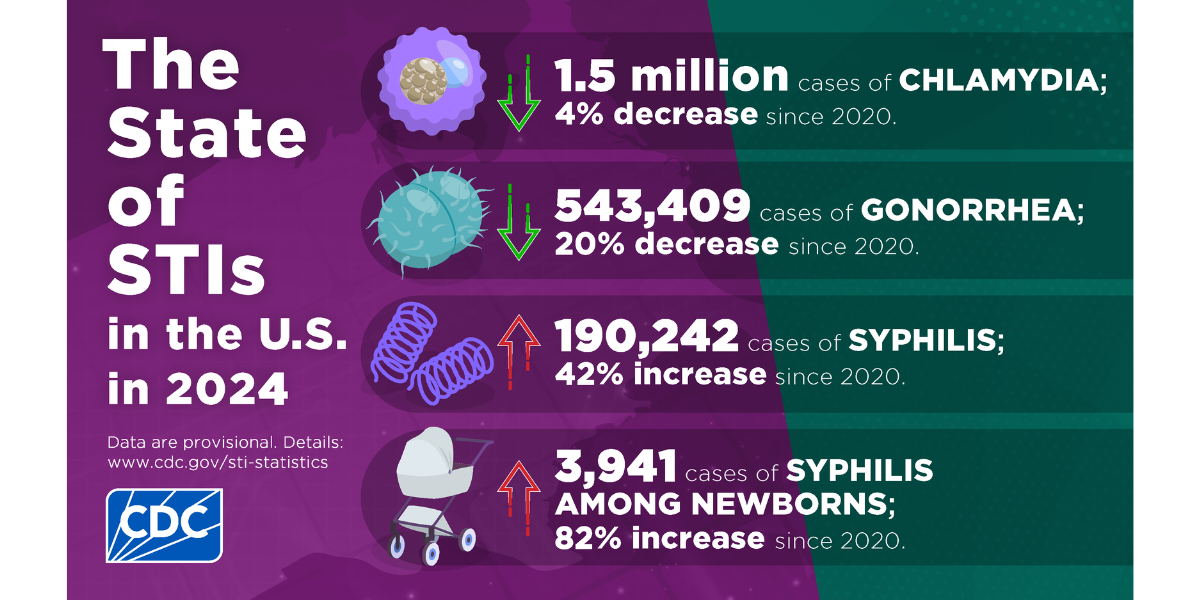
The CDC just released STI Surveillance Data for 2024 that show cases of chlamydia, gonorrhea, and syphilis are slowly declining.
A person receives a vaccine

Could A Vaccine You Probably Already Have Protect Against Gonorrhea? 

There’s potential good news in gonorrhea prevention as a series of studies suggests that certain meningococcal B (MenB) vaccines can reduce the risk of gonorrhea.
Conversations about Doxy PEP and Sexual Health

Learn More About Doxy PEP from Three People Who Take It

Many people who take doxy PEP say it gives them peace of mind in their relationships and sex life. We sat down with Oscar Alexis, Efthimios, and Maxfield Haynes to talk about doxy PEP and get their perspective.
A prescription bag

Are Patients Not Following Through with STI Treatment?

About 1.6 million cases of chlamydia and 600,000 cases of gonorrhea are diagnosed in the United Sates each year. A new study suggests that these patients may not be following through with STI treatment or getting the right antibiotics.
At-home test for chlamydia, gonorrhea, and trich

FDA Approves a New At-Home Test for Three Common STIs

The FDA just approved a new, fully at-home test for chlamydia, gonorrhea, and trichomoniasis. The tests, which is only for women, will be available without a prescription. Users can collect their own sample and have results in less than 30 minutes.
Many hands are placed on a pregnant person's belly

The Impact of STIs on Fertility

Infertility can stem from factors affecting both men and women. Sometimes, these are related to sexually transmitted infections (STIs). Learn more out the impact of STIs on fertility.
A man speaks with a health care provider

Two Studies Show Doxy PEP is a Winning Strategy

Two studies published in this month’s JAMA Internal Medicine offer encouraging findings about the use of doxy PEP.
A man handed a prescription for Doxy-PEP

Doxy PEP Can Help Prevent STIs

Read through FAQa on doxy PEP is the strategy of taking the antibiotic doxycycline after condomless oral or anal sex to prevent chlamydia, gonorrhea, or syphilis.
Doxy-PEP works

New Studies Add to Evidence that Doxy PEP Works for STI Prevention

New studies add to our evidence that doxy PEP works to prevent bacterial STIs among transgender women and men who have sex with men.
PID is Pelvic inflammatory disease

PID is a leading cause of infertility in women

Pelvic inflammatory disease (PID) is a serious infection in the reproductive organs of women that can lead to infertility or life-threatening complications.
Alarming Rise in Syphilis rates

The State of STIs — CDC Reports an Startling Rise in Syphilis

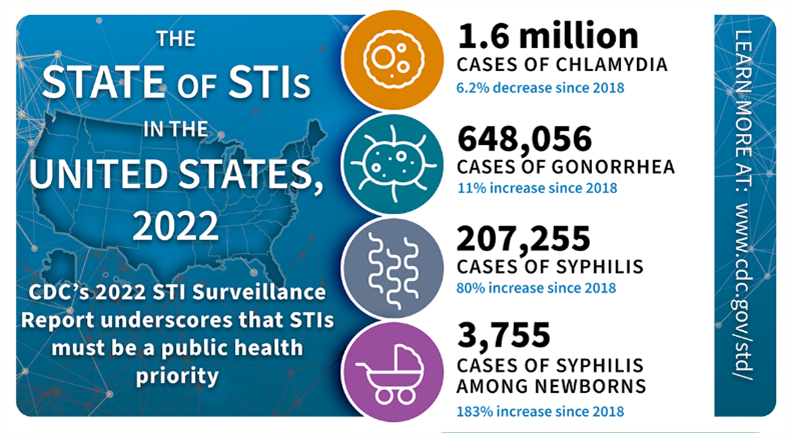
CDC released new surveillance data on sexually transmitted infections. There were 2.5 million cases of chlamydia, gonorrhea, and syphilis reported in the United States in 2022. Most alarming was a rise in syphilis rates, up 80% since 2018.
New drugs to treat gonorrhea

New Antibiotic Shows Promise in Treating Resistant Gonorrhea

A new antibiotic could give health care providers a much-needed new tool in the fight against antibiotic resistant strains of gonorrhea.