HPV-Related Head and Neck Cancer

You have probably heard that HPV can cause cervical cancer. But did you know that it can also cause cancers of the mouth, tongue, and throat? These cancers—sometimes called head and neck cancer or oropharyngeal cancer—often appear years or even decades after HPV infection. In fact, most people with HPV-related head and neck cancers are men in their 50s or 60s.

Here are some of the things you need to know about the connection between HPV and oropharyngeal cancer.

There are over 150 different types of human papillomavirus, or HPV. About 40 of them are spread during sexual activity and are known to infect the genitals, anus, mouth, or throat.

HPV is spread by direct, skin-to-skin contact. It is commonly spread during vaginal, anal, and oral sex but can be spread during any sexual encounter even without penetration.

How common is HPV?

HPV is very contagious and very common. It is so common that experts say nearly all sexually active people will contract it at some point in their lives. About 79 million people are thought to have an active HPV infection at any given time.

Many people are exposed to oral HPV in their life, usually through oral sex. About 10% of men and 3.6% of women have oral HPV. Oral HPV infection is more common with older age.

What are the symptoms of HPV?

Most people have no symptoms. In fact, in most cases the body clears the HPV infection naturally without a person ever knowing they had it. But some HPV infections are persistent.

Some types of HPV can cause genital warts and other types can cause cancer, including cancer of the cervix, vulva, vagina, penis or anus, as well as cancer of the mouth, tongue, or throat.

Is all cancer of the head and neck caused by HPV?

No. HPV causes cancers in the oropharynx which is the name for the back of the throat including the base of the tongue and the tonsils. HPV is thought to cause 60-70% of oropharyngeal cancer in this country. Cancer in this part of the throat can also be caused by other things, most notably smoking.

There are other types of head and neck cancers—like cancer of the larynx, lip, nose, or salivary glands—that are not caused by HPV.

How long does it take for HPV-related oropharyngeal cancer to develop?

It can take many years for cancer to form. The back of the throat has a lot of uneven surfaces and crevices where the virus can lodge. HPV can stay dormant for years before causing cancer. We also know that these cancers can be slow-growing and can go unnoticed for a long time.

If you or your partner is diagnosed with an HPV-related cancer, you should know that they may have gotten HPV years ago or even decades ago. There is no reason to suspect that someone cheated.

What are the symptoms of HPV-related oropharyngeal cancer?

The most common symptom is a lump in the neck that doesn’t go away. This usually means that the cancer has spread to a lymph node.

Other symptoms include a sore throat lasting more than a few weeks, trouble swallowing, voice changes that sound hoarse or raspy, and ear pain.

If you have any of these symptoms, see a health care provider.

Can I get tested?

One of the reasons cervical cancer rates have dropped is because we’re able to screen for HPV and pre-cancerous changes to the cervix. Unfortunately, we don’t have any specific screening tests for HPV or oropharyngeal cancers.

Dentists do look in your mouth for signs of HPV and other infections during your regular check- ups and cleanings. It’s important to stay up to date on those, and to get regular medical check-ups as well.

How can I prevent HPV-related cancer?

Yes. The HPV vaccine protects against the high-risk types of HPV that are most likely to cause cervical cancer and other HPV-related cancers including oropharyngeal cancer.

The vaccine is approved for anyone ages 9 to 45. It is recommended that young people get the vaccine as part of the routine immunizations they get around age 11. This way they can be fully vaccinated before they become sexually active and might be exposed to HPV. If you get the vaccine before age 15, you only need two doses.

Anyone under 26 who hasn’t gotten the vaccine should do so (though if you’re older than 15, you will need three doses). People who are between 27 and 45 can talk to their health care provider to decide whether the vaccine makes sense for them. Getting vaccinated is the most important prevention method.

Using condoms or dental dams during vaginal, anal, or oral sex can also help reduce the spread of HPV. Avoiding tobacco and limiting alcohol intake may also help reduce the risk.

It’s also important to pay attention to your body and your symptoms. Don’t ignore a lump in your throat or a persistent ear pain. If it is cancer, the earlier you find it, the easier it is to treat.

Interview with Dr. Michael Moore

Learn more about head and neck cancer in our interview with Michael Moore, MD, Chief of the Division of Head and Neck Surgery at the Indiana University School of Medicine Department of Otolaryngology and President of the Board of the Head and Neck Cancer Alliance.

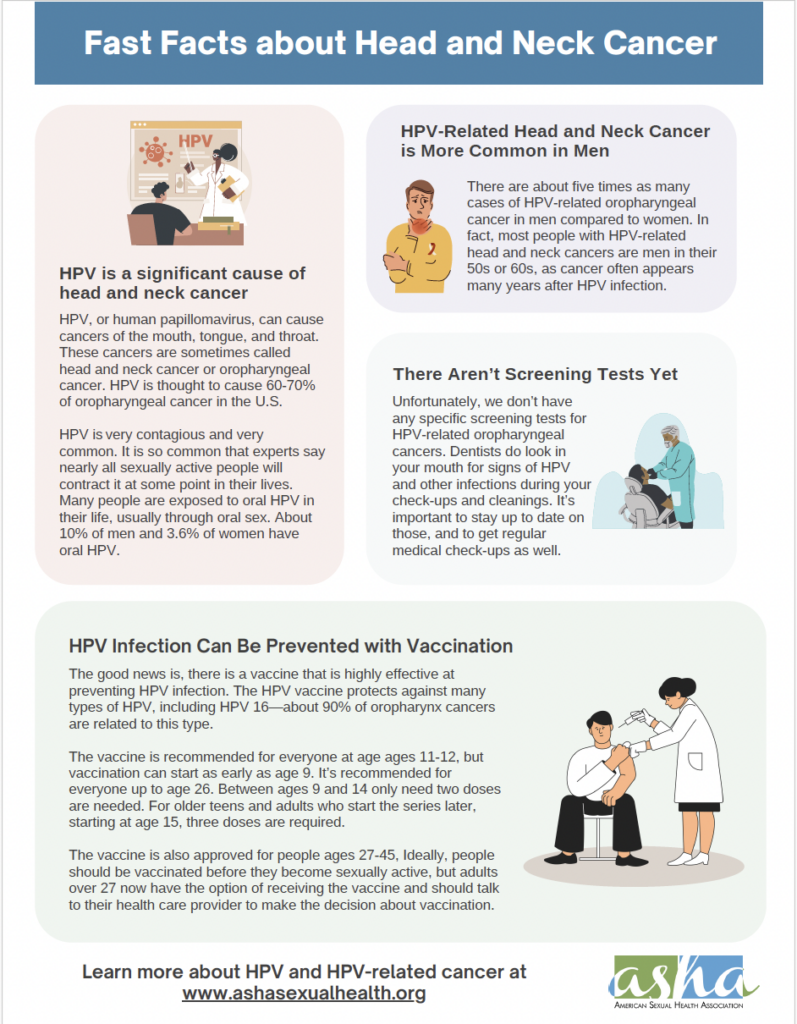
Fast Facts About Head and Neck Cancer

Download the fact sheet to get fast facts about HPV-related head and neck cancer. Learn about the connection between HPV infection and cancers of the back of the throat, the differences between rates of this type of cancer in men and women, and how you can protect yourself and prevent cancer with HPV vaccination.

Learn More About HPV

Managing Herpes

Managing Herpes: The Science, The Facts, The Feelings

Managing Herpes: The Science, The Facts, The Feelings helps take the mystery out of herpes, explaining everything from diagnosis and treatment, to symptom management, to herpes and pregnancy.
A man consoles another man by putting a hand on his shoulder

Adjusting to Herpes—Dealing with the Emotional Issues

Herpes may raise strong emotional issues, especially in the first few weeks or months after a diagnosis. The good news is that these emotions tend to fade away over time.
Five things to know about herpes

Five Things You Should Know about Herpes

ASHA answers many questions from the public about STIs, including about genital herpes. Here we offer five things to know about how to manage this common infection.
Doctor showing something to a patient

Fast facts about HSV (Herpes Simplex Virus)

Herpes is a very common viral infection caused by herpes simplex virus (HSV). I can cause sores on the mouth or face or in the genital area. Herpes cannot be cured, but it can be treated.
STI National Plan

HHS Recognizes Herpes as a Priority in the STI National Plan

The STI National Plan has now been amended to add genital herpes as a priority.
A microphone and a pair of headphones

Diagnosing and Managing Genital Herpes

In this two-part episode of ASHA's Sex+Health podcast, Terri Warren, RN, ANP explains many approaches to diagnosing herpes as well as strategies to effectively manage herpes in a relationship and deal with the emotional aspects of the diagnosis.
USPSTF Logo

Task Force Decides Against Routine Herpes Screenings

The U.S. Preventative Service Task Force (USPSTF) has advised against routine screening for herpes in adolescents, adults, and pregnant women.
Doctor holding a sign that says herpes

ASHA Survey Shows Many Herpes Patients Diagnosed Incorrectly

Think you can tell that a rash or sore is a genital herpes infection just by looking at it? If you said “no,” you’re right. You can’t. And neither can your healthcare provider.

Herpes Vaccine Research

There are currently both preventive and therapeutic vaccines under development. While the primary focus is on HSV-2, the primary cause of genital infection, HSV-2 vaccines may also have benefits in preventing or treating HSV-1 infection.
Two people holding hands on a table

Herpes Support Groups

Support groups provide information and allow participants to share experiences, fears, and feelings with others who are concerned about herpes.
A male couple with their heads together

Herpes and Relationships

The best way for couples to deal with herpes is to talk about it openly and make decisions together. So what’s the best way to start the conversation?
A pregnant woman with her doctor

Genital Herpes and Pregnancy

If you are pregnant and you have genital herpes, you may be concerned about the risk of spreading the infection to your baby. Be reassured that the risk is extremely small.
Oral herpes

Understanding Oral Herpes—Answers to Your Questions

About 50 percent of the adult population in the United States has oral herpes. Most people contract oral herpes when they are children by receiving a kiss from a friend or relative.
Doctor holding a pill bottle and writing

Treatment for Herpes—Understanding the Options

While there is no cure for herpes simplex virus (HSV) infections, there are various treatment options available that can help manage symptoms and control outbreaks.
A health care provider talks to a patient

Herpes Testing

Is that sore or rash actually genital herpes? Can you tell by just looking? Can a healthcare provider? No! When it comes to diagnosing genital herpes, it takes more than a look.
Symptom in the dictionary

Signs and Symptoms of Herpes—What You Should Know

Most people with herpes won't experience symptoms, but knowing what to look for can make you more aware.